GI stasis is something I wouldn’t wish on my worst enemy.
It’s an ugly, silent killer that can turn your life upside-down in a matter of hours. It’s left me curled up in bed crying my eyes out as I’ve waited for a call from the vet.
Baby and I have dealt with GI stasis three times. I’ve had to do a lot of research and develop a plan to keep Baby out of the hospital.
Here are some answers to common questions about GI stasis, how vets treat GI stasis, and our prevention plan.
What is GI stasis?
GI stasis is a digestive issue. Food slows down as it goes through your rabbit’s GI tract. This slowing or stopping altogether can cause bad bacteria to build up. That bad bacteria then makes a gas that builds up painfully. It makes the issue worse because a rabbit in pain doesn’t like to eat or drink.
Rabbits basically need to eat ALL THE TIME to keep their gut healthy, so this slowdown can be disastrous.
What are the symptoms of GI stasis?
Because Baby has had GI stasis three times already, we can tell almost instantly when he has it.
He’ll hunch up in one corner and refuse to move even when we crinkle a treat bag. When I’ve tried to forcibly move him along, I’ve noticed he has peed just a tiny bit.
It’s important to have an established routine with your rabbit. That way you’ll be able to quickly tell if something is “off.” We know that if Baby isn’t done with his afternoon nap by 5 p.m., we should do a check in with him just in case.
You should also groom/pet your rabbit often so you can identify a change in their stomach. The first time Baby had stasis, I was able to feel that his stomach seemed a bit harder and bloated than usual.
Look for these signs in your own rabbit:
- Refusing to eat or drink
- A lack of poop or much smaller poop than usual
- Hunching up (one cuzrabbits reader said her bunnies push their bellies to the floor instead when they have stasis)
- Grinding of teeth (this is different than the happy “grinding” you may hear while petting your bunny)
- Looking like they’re in pain
- Feeling a hardness or swelling in their stomach
Why do rabbits go into GI stasis?
There are a number of reasons a rabbit might go into GI stasis:
- A bad diet: Rabbits need a low starch, high fiber diet. That means more hay, less pellets.
- Stress: Some rabbits don’t handle things like changes to their environment, loud noises, or travel.
- Other health issues: When a rabbit is in pain from something like overgrown teeth or arthritis, they can stop eating.
- Blockage: Something may be blocking your rabbit’s digestive tract, like a clump of hair, pieces of fabric, or cardboard.

What do you do if you think your rabbit has GI stasis?
GI stasis in rabbits is an emergency.
Go to the nearest emergency exotic veterinarian hospital near you.
While some people have successfully treated GI stasis on their own, I do not recommend it.
Unless you’ve been to vet school, you’re not an expert. For all you know, your rabbit may actually have a blockage of hair or cardboad — which means force feeding critical care will only make matters worse.
What will a veterinarian do to treat GI stasis?
Each time Baby had stasis, the treatment followed the same pattern:
- First Evaluation: Baby was taken in to be evaluated. In this stage, they checked Baby’s vitals to see if he needed immediate emergency care or if he could wait in line with the other emergency pets that needed care.
- Incubation, hydration, and medication: Baby always ended up having a lower temperature than they wanted. He was also dehydrated, so they’d give him an IV. The IV hydration is supposed to help loosen any blockage that may be there. They’d also start giving him pain medication and motility drugs (to get the digestive system up and working again).
- Overnight monitoring: Baby’s emergencies always happened after 5 p.m. He never recovered fast enough to be released that same night.
- Suctioning: A few of the times Baby was hospitalized, they had to try to suction out the blockage of fur.
- Daytime check-ins: The vet in charge will typically give you a status update in the morning. No news is good news in this case, so don’t worry if they’re a bit late with the call. Depending on how busy the staff is, they may send you photos of your bunny in their recovery nook.
- Monitoring until better: Baby has always had to stay in the hospital for multiple days. The vets are essentially waiting for 50 poops in one day as well as consistent eating a drinking. We’ve been held up by Baby only pooping 15 times. Better than nothing but still not good enough for the vets to feel comfortable sending him home. After a few days, we were given the choice of taking Baby home if we were desperate. They trade-off is that if he got worse again on the 1+ hour car ride back home, we’d have to turn right back around and readmit him — starting the process over.
- Release: Once Baby was better, they’d set up a pick-up time. They were pretty flexible with the timing.
- Home care: The vet prescribed Baby pain medication and motility drugs for use to give him at home via syringe. We also had to buy Critical Care to syringe feed time three times a day. Make sure to follow whatever instructions your vet gives you.
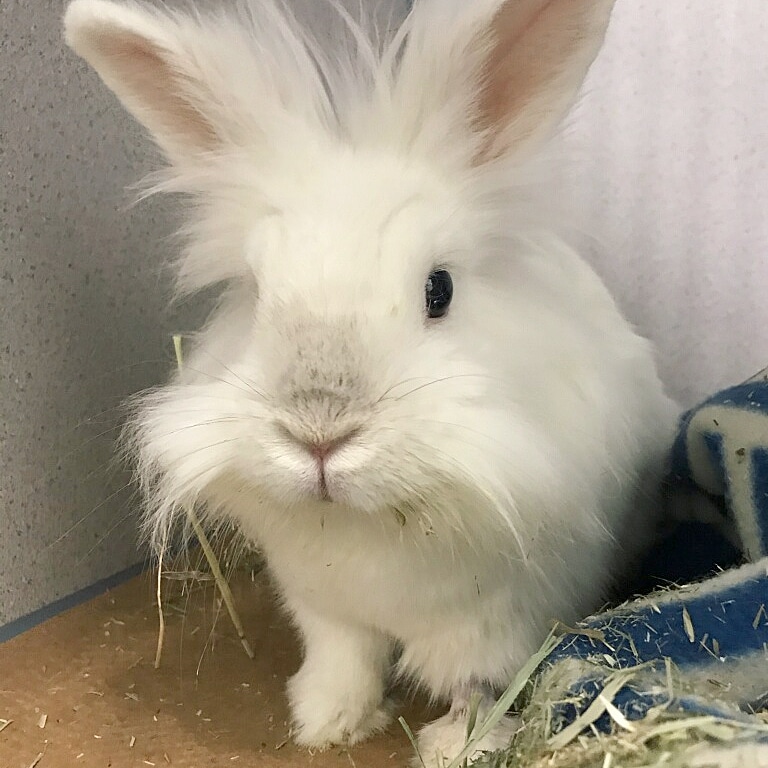
What will the vet do if your rabbit has had multiple cases of GI stasis?
Our emergency veterinarian decided to do some testing when Baby had GI stasis more than once.
They took bloodwork for testing and tried to see if he had E. Cuniculi. It’s a parasite that can cause issues with your rabbit’s nervous system and can be an underlying cause of GI stasis. For Baby, the tests came back negative.
They also took an X-ray to see if they could find anything odd in his system. They didn’t see anything wrong in Baby’s scans.
Their other theories were that maybe he is starting to develop arthritis and just isn’t grooming as often as he used to during shedding season. If that’s the case, when he does groom, he’ll end up picking up bigger chunks at a time, which could lead to a blockage.
The discouraging thing about GI stasis is that sometimes you won’t know the exact reason for it. There’s no guarantee it won’t happen again. All you can do is try your best to be an amazing bunny parent.
What is the cost of treating GI stasis?
Each time Baby had stasis, the total bill came out to be between $2,500-3,000.
That is a hefty sum of money.
We paid for the first case with the emergency fund we had been creating for Baby. Each month, we put in about $100-200 in the bank account.
We funded the second and third trips to the hospital with money from stimulus checks, tax returns, and more of the money we’d continued to save each month.
Not everyone has that kind of money available to them.
BEFORE an emergency strikes, I recommend getting exotic pet health insurance through Nationwide. They’re the only insurance company in the United States that covers rabbits. DO NOT wait until after your rabbit’s first GI stasis incident because then it will be considered a preexisting condition. I’ve heard you can get your pet’s case reviewed after 6 months of being stasis-free, but we haven’t gotten to that point yet.
Our GI stasis prevention strategy
My husband and I have developed a plan with the help of our primary care veterinarian to prevent GI stasis.
As cute (but mostly horrifying) as Baby looks with a shaved leg from the IV, we definitely don’t want a repeat episode.
That being said, we can only do the best we can. Nothing is a guarantee.
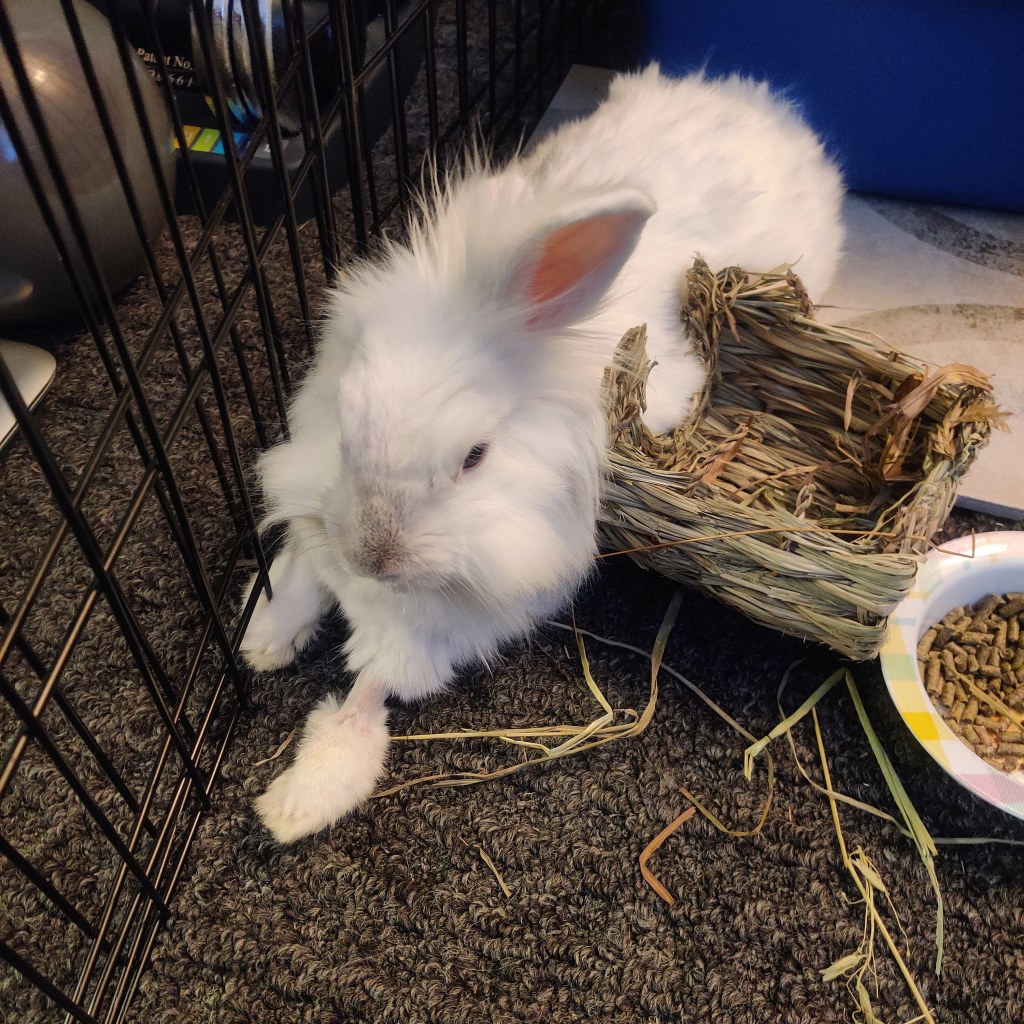
Food
Baby has constant access to fresh timothy hay. Because I work from home, I’m topping off his bin every few hours. You can also mount a hay feeder to your rabbit’s playpen.
My husband feeds Baby a few papaya treats each morning, breaking them into smaller chunks. Papaya is supposed to help break down hay in his stomach.
We’ve also started giving him one Oxbow Natural Science Digestive Support each night before bed.
One of the biggest changes? We’ve significantly limited the amount of pellets we feed Baby each morning. Our primary vet told us rabbits technically don’t need pellets at all. They were primarily used to fatten up rabbits being raised for meat, but obviously we have no need for that. Now I just give baby maybe ten pellets each morning — but I put them in a puzzle feeder to make him eat slower and use his nose.
Grooming
My husband and I wake up at different times, so we each have separate morning grooming sessions with Baby. I also end up petting and grooming him for at least an hour each night as we watch TV or hang out in the living room.
Besides the normal petting, we go in and really try to make sure we’re picking out loose chunks of hair. Every bit helps and means less going into his stomach.
We’ve also invested in a Small Pet Select HairBuster. It’s great for the longer sections of hair on his mane. Here’s our full review of the HairBuster.
Limiting harmful materials
We’ve also taken out any cardboard from his area that he could potentially injest. When he was younger, Baby would just shred cardboard boxes as he made tunnels. But we started to notice he was eating more of the bits. We just don’t want to take a chance that it will cause a blockage.
We also don’t give Baby any cloth items for the same reason. He tended to start eating at the blankets. So now he just has access to the couch blankets, and we’re around to supervise and tell him “no.”

Exercise
We’re still working on this part of the plan, but our vet suggested we help Baby become more active.
This could be anything from training him to do tricks to having him participate in agility exercises.
Years ago, I built one of those jumps like the ones horses use in competitions. But it was definitely a rough build, and my family all voted the nails on it were a hazard! So I’m on the look out for something a little more safe to invest in.
When I had makeshift jumps (make out of dowels and empty tissue boxes) was able to train Baby to go over 2-3 jumps in a row though. He is very treat motivated, so he was all for the extra activity with pellet rewards were involved.
I bought Baby a new collapsible cat tunnel for Christmas, so I’m hoping to incorporate that in a course once I have everything I need!
Regular vet visits
We make sure to take Baby to the vet at least once a year.
This time around, our vet wanted to make sure the GI stasis wasn’t stemming from a teeth issue. Apparently that’s common in lionhead rabbits. Baby seemed to have a little bit of an issue, but the vet said it was only an issue if the growth was significant in six months. So we’re going back in early spring for another checkup.
Have a Plan
The emotional toll of a GI stasis incident is great. Not only can it put your rabbit’s life in danger, but it also reeks havoc on their human parents’ emotions.
Make sure to know the signs of GI stasis and know which exotic vets are open at which times. The last thing you want to do in an emergency is waste time calling around to find a location open 24/7.
You also want to take preventive action.
Do you have any GI stasis advice for rabbit owners? Leave a comment to let people know your tips and tricks for navigating this horrible health issue.
Note: As an Amazon Associate I earn from qualifying purchases. I get commissions for purchases made through links in this post.
Stay Connected
Sign up for our newsletter through Substack. We’ll send updates about our latest blog posts and projects, so you won’t miss a thing!
 cuzrabbits