There are plenty of companies that market dangerous treats to rabbit parents by using a cute bunny on the packaging. They may even falsely say one of their products is especially for rabbits, despite including ingredients that can cause health issues.
I’m an experienced rabbit owner, yet even I have fallen for these marketing tricks.
So, how can you figure out which treats are safe and which you shouldn’t waste your money on?
Maria Lary of Texas worked at a veterinary office and decided to start her own Etsy shop AshyandCC. She shares some things that she considers when making treats for her shop and picking out food for her own rabbits.
How do you know whether the ingredients in treats are healthy for rabbits?
There are many different types of treats out there, like herb mixes, willow balls, compressed timothy hay cubes. When choosing between all these options, make sure to look at the ingredients on the packaging or the online listing.
Lary says she would double check with the exotic vet at her office to make sure certain foods were okay for her rabbit. But you can also do your own research, comparing packaging ingredients to lists of healthy foods on trusted websites.
“Google would be my best friend, searching on medically acclaimed websites,” Lary says.
Simpler, more recognizable ingredients are better, especially if you’re questioning whether a treat is actually healthy for your rabbit.
“Things that are too processed are bad for them,” Lary says. “If you see that a treat has too many ingredients, that is going to be a warning sign right there, especially if it’s ingredients that you don’t know what they are.”
Some good ingredients to look out for are:
Timothy Hay: Rabbits need all the hay they can get! It helps with their digestion and keeps their teeth trim.
Certain Tree Branches: Little branches and twigs can also give your bunny’s teeth a workout! Just make sure you know which trees are safe for your rabbit.
Certain Fruits: Since fruits have sugar, you want to make sure you don’t overdue it with treats that have foods like bananas and apples. But they can be delicious in moderation!
Certain Vegetables: Veggies are good for your bunny in general, but make sure you keep the carrot quantity in check. You may not realize it, but carrots are high in sugar too.
While researching, you may find that the safety of some ingredients are not as straightforward as others.
It may be better to take a more cautious approach.
“Things that are iffy, I usually just don’t feed them to my rabbits. Recently, I was looking into honeysuckle and adding those to treats because we have a huge honeysuckle growing. But I was seeing that there was conflicting opinions on what kinds are okay for rabbits and what are not. So I’m probably just not going to be including them,” Lary explains.
Which bunny toy construction techniques should you beware?
Even if a treat is made from healthy ingredients, it can still be dangerous because of how the treat may have been made.
Steer clear of toys or treats made with glue (which can be accidentally ingested) and wire (which could cut your rabbits mouth during chewing).
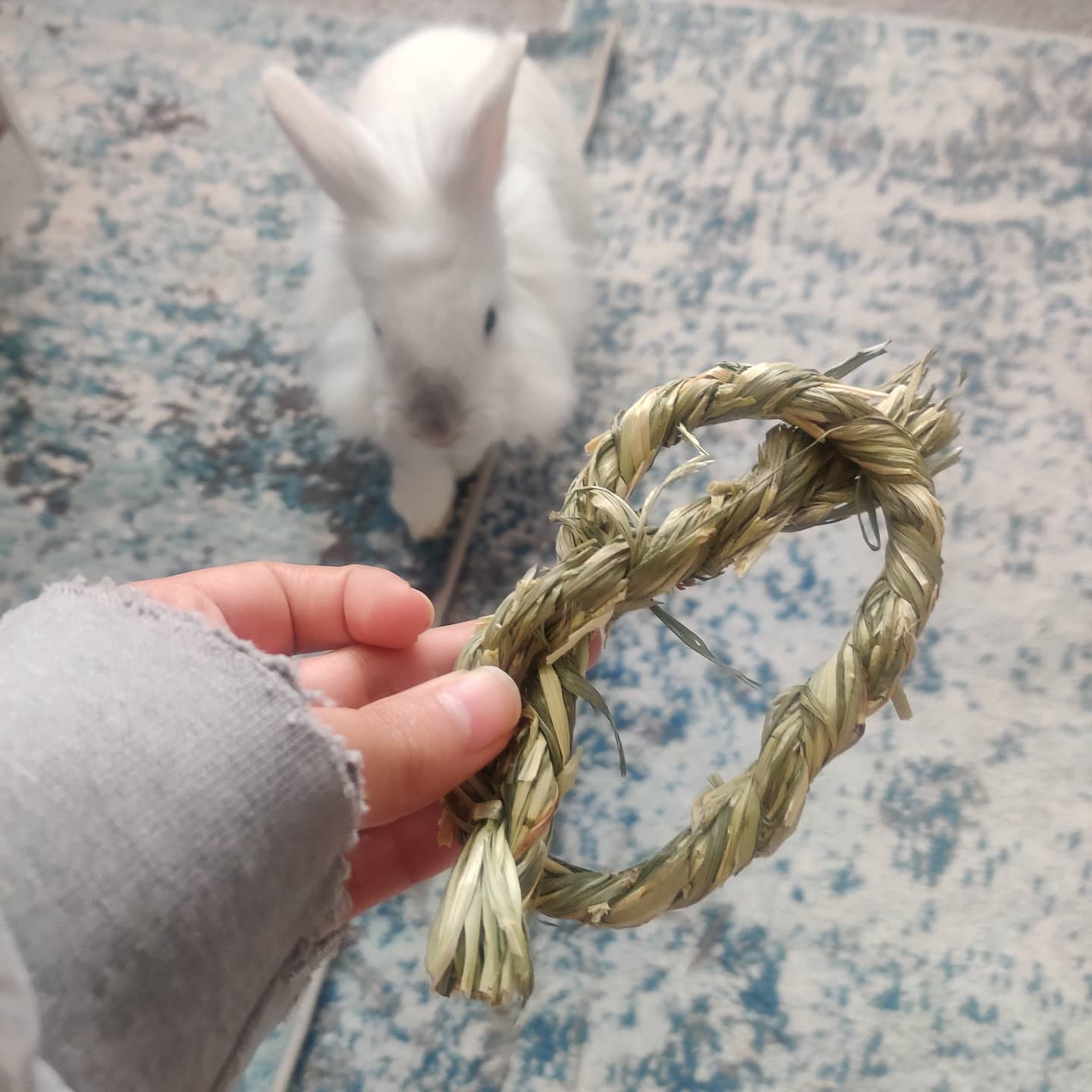
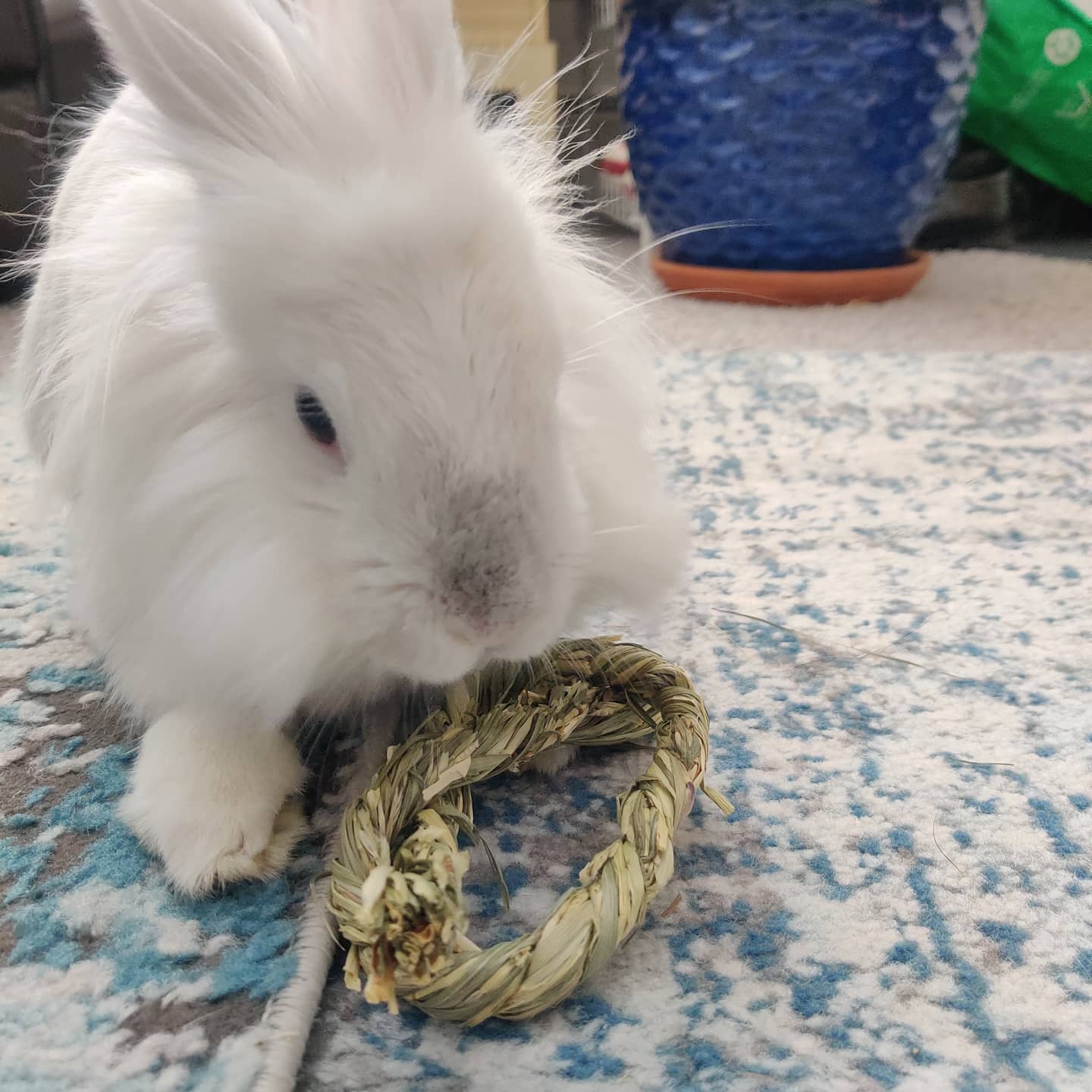
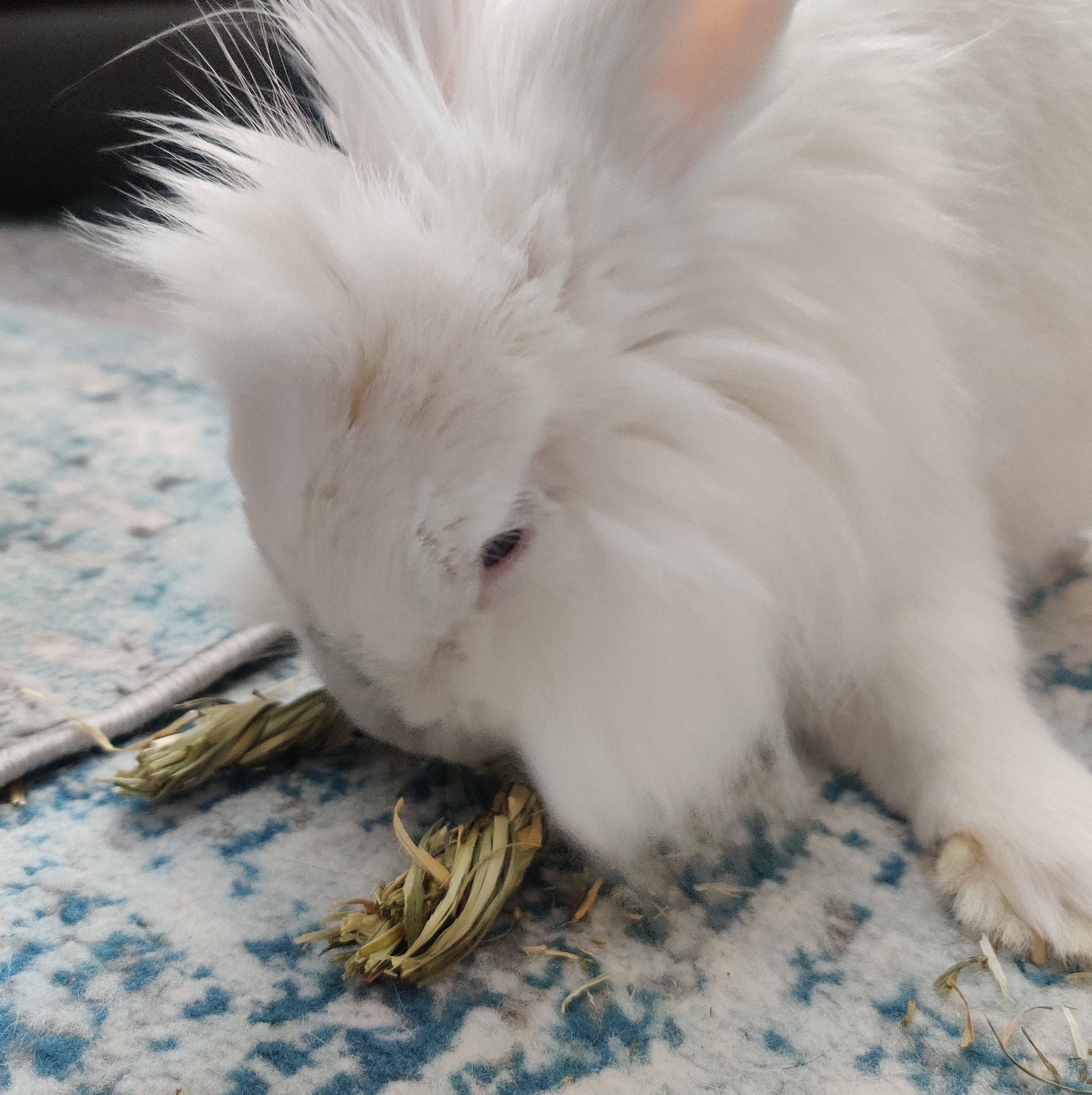
Braided or woven hay rings and mats may fall apart after a while, but these natural ways of keeping treats and toys together is much safer.
What are some rabbit companies and small businesses you can trust?
If you have no idea where to start, it’s worth researching the companies themselves.
Check product reviews before you buy.
Look at the comments on their social media posts. While every company will have some naysayers and the occasional angry customer, oftentimes people will call out companies online for their bad practices.
Here are some good options to get you started.
Companies and Small Businesses
Small Pet Select is a family owned business that focuses on transparency and quality ingredients. Many of their employees own rabbits themselves!
Oxbox is another respected rabbit supply company. It’s often recommended by vets and is known for its Critical Care products (given to sick rabbits).
AshyandCC is Lary’s Etsy shop and is relatively new on the scene. There are a wide variety of treats to choose from, and you can even order a box packed with treats and toys.
BinxBox is a well known subscription box for bunnies with monthly and bi-monthly options.
Your own household
You can also grow your own veggies to incorporate into treats.
“I would always look for healthy options that maybe I have growing in my yard. We grow lettuce, collard greens, kale, parsley, and lavender. We have a huge rosemary bush. So I have a huge variety of things that I can choose from that are free, available to me,” Lary says.
What are Baby’s favorite treats?
Over the years, Baby has been exposed to a bunch of different types of treats. While there have been a lot of misses, we’ve also discovered some favorites – that are actually healthy.
Right now, he’s obsessed with:
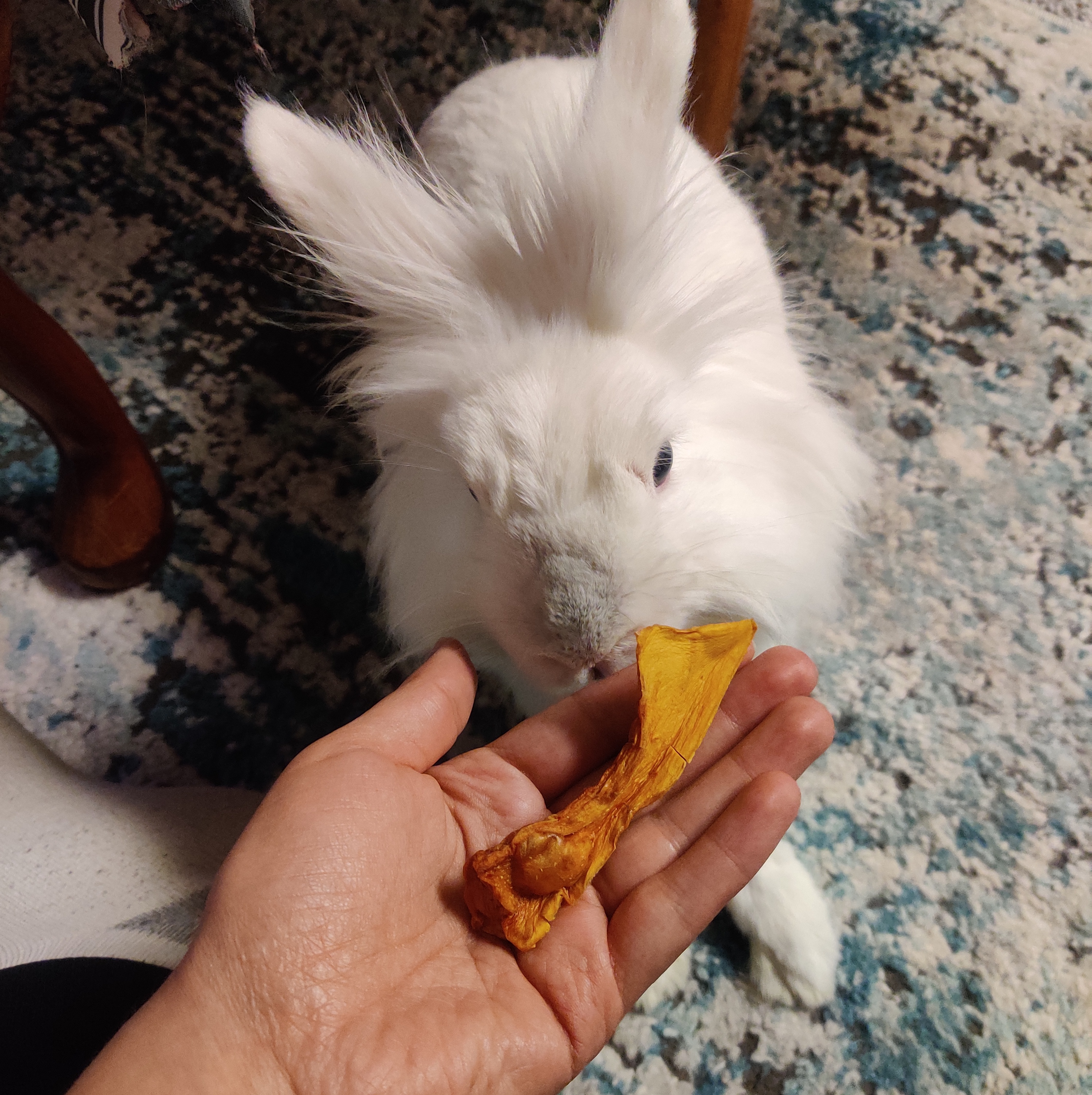
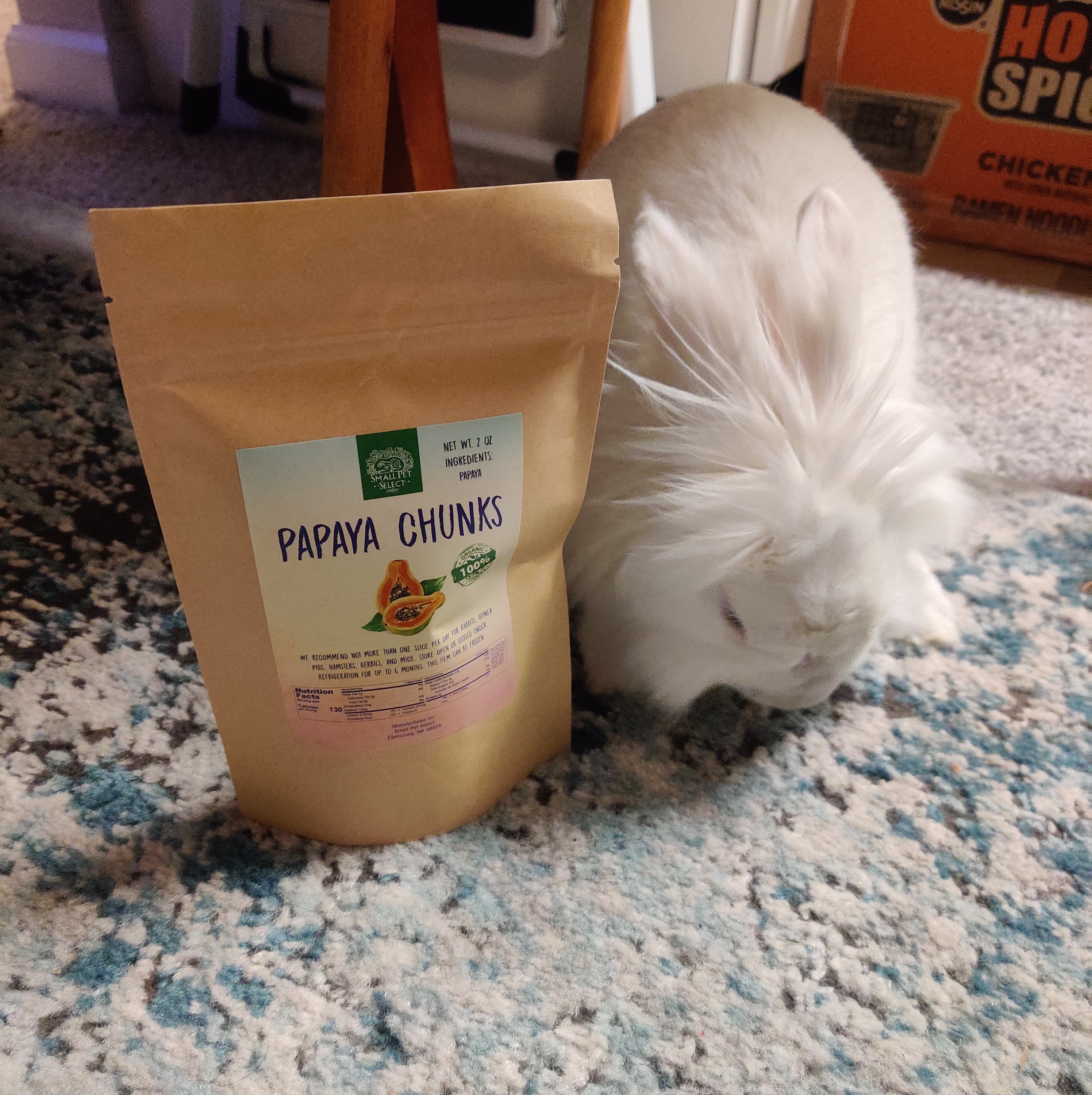
Papaya Treats: They’re delicious and great for his digestive system. We give this in moderation to prevent him from getting too much sugar.
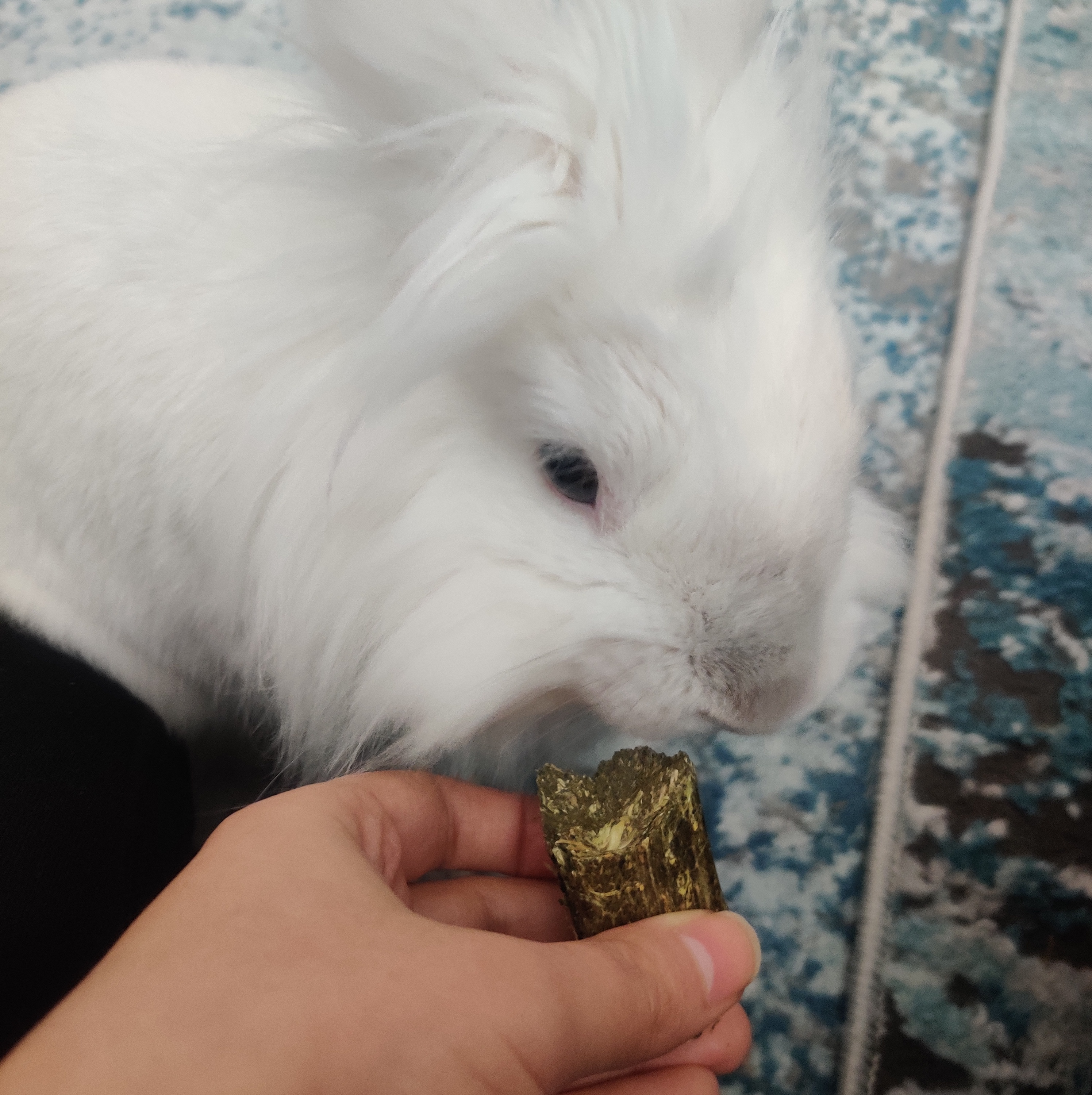
Timothy Hay Cubes: With a little trickery on our part, Baby is getting more hay into his diet. It took some time for him to get used to the idea, but now he loves chewing on these.
Have any treat suggestions for us and other rabbit owners? Let us know what your bunny’s favorite treat is in the comments!
cuzrabbits gets commissions from some of the affiliate links in this post. Support our education efforts by buying your pet supplies at Small Pet Select.
There are many people out there who consider rabbits “starter pets.”
While this may make most bunny parents cringe, it’s understandable to think that if you haven’t researched the breakdown of how much it actually costs to own one.
Aside from love and care, rabbits need things – whether it’s food, shelter, or toys.
And they may need services like medical care or nail trimmings.
I’ll break down what some of the costs related to rabbits are.
Keep in mind, with a lot of these items, you may find bargains of Facebook Marketplace or you may splurge on pricier items. So this isn’t going to be an end all, be all number.
Consider this a guide if you’re thinking about getting a bunny.
More experienced rabbit owners may find this as a resource for pampering your pet or finding money saving opportunities.
Food
Rabbits need three categories of food:
Hay
Pellets
Veggies
Treats
Hay
Rabbits are supposed to eat a bundle of hay about the size of their body each day.
Hay helps wear down their teeth and keeps their digestive system on track.
The cheaper option
Technically, adult rabbits only need Timothy hay.
Local stores and farmers sell Timothy hay by the bale pretty cheaply.
I can usually get a giant bale of hay for less than $10, and that can last my Lionhead about 3-6 months depending on how hungry he is from month to month.
WARNING: If you go this route, just make sure your hay doesn’t come from a state with known cases of RV2. (SPELLING) This disease can be transferred through hay and is very deadly to rabbits.
The pricier options
Depending on where you live buying Timothy hay online or in a pet store may be your only choice.
This can get very expensive, but some people like the smaller shipments, especially if you don’t have space to store an entire bale.
Some bags of hay in the store or online can be around $8 for a small bag. I try to get these when they’re on sale for around $5.
I only buy these types of bags in Orchard Grass and Oat hay as a “treat” for Baby. Only using 2-3 handfuls a day makes each bag last about 1-2 months.
$20 (Timothy hay) + $60 (Special treat hay)= $80
My approximate hay total per year is $80.
Pellets
This one, I barely remember what I get. Usually I will just go to Walmart and get a giant bag for cheap.
Lately though, I’ve become more cautious about how many pellets I feed Baby each day. Pellets really discourage Baby from eating all the hay he needs to stay healthy. We even have to keep the tub we keep the pellets in hidden or else he will beg for them. At one point he had even tricked my husband and I into each giving him full portions of pellets each day (like a sneaky child).
The supply I have now will likely last a year, since he only gets a small handful from me each morning.
Some rabbits are very picky about which pellets they enjoy. Some rabbit owners only trust certain brands or don’t have the space to store bulk buys.
Some options I know of:
Manna Pro: About $10 for 25 lbs. (This is what I would usually get from Walmart)
I’ve also tried the smaller package of Manna Pro Rabbit Feed when I lived in a smaller apartment with less storage. It wasn’t bad, and Baby seemed to like it because the pellets were longer.
My approximate pellet total per year is $10.
Veggies
We typically restock on veggies every other week, and meal prep the food into glass containers. Each night, Baby asks for his veggie dish by standing near the fridge!
We try to give him a variety of greens and vegetables to keep him interested. But his favorite is definitely parsley!
$4.39 (Romaine Lettuce) + $1.29 (Parsley) + $3 (Carrots) + $2 (Celery)= $10.68 every other week
My approximate veggie total every other week is $10.68. Per year it is about $256.32.
We discovered these timothy hay cubes when we were trying to get Baby to eat more hay. Because they come in a “treat bag” and can easily be carried off to a corner, Baby barely even notices it’s not an unhealthy treat – but just regular old compressed hay. The only downside to this is that when he really gets into eating it, the crumbling hay makes a mess. So more vacuuming is required. I’ve only bought one bag so far, but it’s lasted about three months. There’s still a lot more in the bag, so I’m thinking that’s two buys a year (about $5 each).
We also give Baby papaya treats. Our vet suggested it would help prevent GI Stasis by breaking down hair in Baby’s stomach. They come in long strips, but I cut them up into smaller pieces. He gets about a pinky nail size piece each day. I’m guessing each bag will last us about four months each, so I’m thinking we’ll end up buying 2-3 bags a year (at about $6 each).
$10 (Timothy Hay Cubes) + $18 (Papaya Treats)= $28
This is the category that you can either go really cheap or really fancy.
Look on Pinterest and you’ll see so many deluxe rabbit rooms with giant bunny castle setups and coordinating colors. There’s not really a limit to how bougie you can make your rabbit enclosure.
I’ll try my best to estimate what my current set-up costed, since I consider Baby’s area to be somewhere in the middle. It’s pretty simple, but does spoil him a bit.
I will not give a cheapo option, because I don’t support only caging bunnies with no free roam time.
What my setup costs
Things have changed over the years as I’ve learned what Baby likes and what he makes it his mission to eat versus enjoy. Some things have gotten their wear and been thrown out.
But here’s what’s in Baby’s pen now:
Rug: I keep a rug under Baby’s area in case he accidentally misses the litter box. I’ve also lived in apartments with only hardwood floors, which he treats like lava. I think I paid about $25 for it five years ago.
X-Pen: I got a pet playpen off of Amazon for about $45 (on sale). I’ve never had a problem with it. The pen is big enough for me to not feel bad leaving him in there overnight or when I’m not home.
Water Bowls: I don’t want to get into the whole bowl v. bottle debate, because we already looked at the research. Right now, we have a two bowls – one in his pen and one just in the living room for when he’s roaming. I don’t remember what I paid, but it couldn’t have been more than $5 each on sale.
Bed: Many rabbit owners have the famous Ikea bed, but I got the canopy bed at a tag sale for $5.
Litter boxes: Like the water bowls, we have two – one in the pen and one in the living room. One is just the bottom of a carrier that I got at a tag sale (likely also really cheap, but it’s great because the sides are so high). I got the other litter box at Walmart for under $10.
Castle: This was my one big splurge. Before, we had a secondhand cat condo for him to snuggle in (soooo cute). But then we realized he was secretly eating the cardboard lining inside. A bunny castle was the safest alternative we could think of, since the wood is safe for rabbits. Small Pet Select has since created a simpler version of their bunny castle, which seems more portable and better for apartments.
That’s the basics.
I also have random seasonal decor that I’ve bought from the Dollar Tree or random after-Easter sales on Michael’s and Jo-Ann Fabrics. I won’t include these in the total because these are more for my personal enjoyment. Baby definitely does not care about the ✨aesthetic✨ of his space.
Over five years, Baby has been through a lot. Here are some medical costs to consider:
Neuter
Yearly routine visits
Sprained leg
GI Stasis
This random time I looked on the internet and convinced myself he had a horrible disease when it was nothing.
I’d guess all of these things totaled up to about $10,000.
Luckily, I’ve always had an emergency savings account set aside for Baby and regular emergency money. So I was never unable to pay for care.
The sad things about medical care costs is that sometimes people are unable to spend thousands of dollars at a moment’s notice. From stories I’ve read on rabbit Facebook groups, some owners opt for health insurance through Nationwide while others have to stomach $15,000 in bills from ONE medical emergency. Some have even had to put their rabbits down or let them pass away at home because they could not afford care.
My approximate medical care total is $10,000.
One hospital trip left Baby with a shaved leg!
Extra spending
There are some things that are not necessarily necessities when it comes down to it. Depending on your circumstances and your knowledge of your rabbits preferences, you may not spend as much money on some of the following categories.
But you should definitely consider these things when considering just how expensive a rabbit can be.
Bunny Proofing: Each house/apartment requires something different, and each bunny’s destructive habits are different. For Baby, we’ve bought extra rugs as a precaution to protect the existing carpet. We’ve gotten free white cube stacking grids off of Facebook groups that we’ve used to block areas off. I’ve bought special tubing for cords that have to be in the open. This accumulates over the years and some things have had to be replaced or reinforced. I can guess I’ve spent around $200 over the years rabbit proofing various living spaces.
Toys: Technically a rabbit doesn’t need toys to live. But if you’re going to own a rabbit and not give it a SINGLE toy, you are a total monster. I’d say I’ve spent about another $150 on random toys (edible and plastic) since getting Baby.
Random Decorations and Photo Props: It’s difficult to guess what I’ve spent on decorations. Over several years, I’ve scoured tag sales, flea markets, clearance racks, and dollar stores. A random guess would be another $150?
Bunny Presents: Yes, I’m one of the rabbit owners who will buy her bunny Christmas presents and Gotcha Day presents. I’ve even made a bunny veggie “cake” and sang the Happy Birthday song to Baby. Over five years, I’d guess I’ve spent another $200 on these random things.
Failed Attempts: There have also been a bunch of things that Baby has not particularly enjoyed that I’ve “wasted” money on. If he doesn’t eat a whole treat OR I find out later it is unhealthy for him OR if he doesn’t even look at a new toy, it’s a fail for me. I’d say I’ve spent about $100 on random things that I’ve had to toss, donate, or resell.
Nail cutting and grooming: Some people pay for these services at local clinics or fundraisers. I just do them myself at home, so my cost is at least fixed. A HairBuster comb cost around $20, and nail clippers were probably a few dollars.
My approximate misc. spending total over five years is $823.
The approximate cost of owning Baby over five years is $12864.60.
That is an absolutely mind blowing number.
I have to remind myself that over five years, it’s easy to spend that much – especially since a lot of stimulus checks and tax returns went towards Baby’s care. And any other pet would likely cost something similar if not higher.
I love Baby, and if I had the money, I’d likely spend even more on him. In all honesty, I likely have spent more than that with random purchases I may have forgotten about. I’d give him the best bunny dream life I possibly could, with all the yummy treats and all the wooden tunnels and hidey-holes.
Every rabbit and rabbit parent is different. You may spend more money on your rabbit. You may spend less money on your rabbit.
Either way, it’s important for new owners to be aware that all pets cost money.
There’s no “I actually love my rabbit” spending threshold, but you should want to give your bunny a happy and safe life. Care goes beyond love and attention (which they also need).
Pet bunnies need owners who go into the process well researched and with the practical means to support them.
Stay Connected
Sign up for our newsletter through Substack. We’ll send updates about our latest blog posts and projects, so you won’t miss a thing!
Note: As an Amazon Associate I earn from qualifying purchases. I get commissions for purchases made through links in this post.
cuzrabbits gets commissions from some of the affiliate links in this post. Support our education efforts by buying your pet supplies at Small Pet Select.
We finally broke down and bought Baby the HairBuster, a comb for rabbit fur.
While we’re Small Pet Select ambassadors (and there are some affiliate links in this article), we’ve decided to give an honest review of this bunny brush.
Why we bought the HairBuster
The past year has been quite the stressful journey. Baby had not one but two instances of GI Stasis.
It definitely took a hit to our emergency funds, and our stimulus checks went largely to his medical treatments.
The hospital visits were also extremely nerve-wracking. Both included four overnights at a large emergency hospital about an hour and a half away from home. It was no vacation stay for Baby. And I was a nervous wreck, crying everyday and waiting anxiously by the phone for updates from the vets.
NOT an experience we would want to repeat for a third time!
After the second visit, the vet shared some theories about what may be happening.
Baby is no spring chicken and may be developing arthritis. He’d likely groom less, especially near his tail, which would take a stretch.
He may be grooming less frequently in general now that he’s older. So when he does groom, he’s ingesting a lot more hair all at once – instead of small amount over time.
Either way, we had to change things up.
Until that point, we hadn’t been brushing him with a real comb or brush. Nothing ever seemed to work. Baby either hated it and would attack. Or the brush itself wouldn’t actually pick up any hair.
The hospital visits told us our bare hands and hours of petting just weren’t getting the job done, especially during shedding season.
How we got our rabbit used to the brush
Once the comb came in the mail, we tried to get Baby used to the feeling of it.
It’s definitely more intense looking than any brush we’d ever tried. The comb has hard metal teeth with a piece of rubber weaving in between every few. The handle is also hard plastic but easy to grip.
Baby was not interested at first. He even grabbed in in between his teeth and tried to push it away.
We started out slow. At first, we pet the top of his head (his favorite) while running the flat part of the comb along his fur – not putting the comb teeth through the fur.
Once he got used to the feeling, we started replacing our hand with the comb. We tried on his lionhead mane first, since it’s closest to the head pets he loves. Then we moved to his butt, which in general is a no-go for him. It took longer for him to get used to it, but you could tell his hops away were just nervousness. The brushing wasn’t actually hurting him.
Does the HairBuster work?
We haven’t gone through shedding season with the comb yet, but after a month, we’re really starting to see a difference.
Here are our thoughts so far:
Pros
Effectiveness: Even after shedding season has ended, this brush gets a surprising amount of hair during each brushing session. It also means less fur on my hand when I’m just trying to pet Baby, not necessarily de-hair-ify him.
Oddly satisfying: There’s something about watching the line pattern that forms in the fur when you brush along your rabbit’s back – almost like a fluffy zen sand garden.
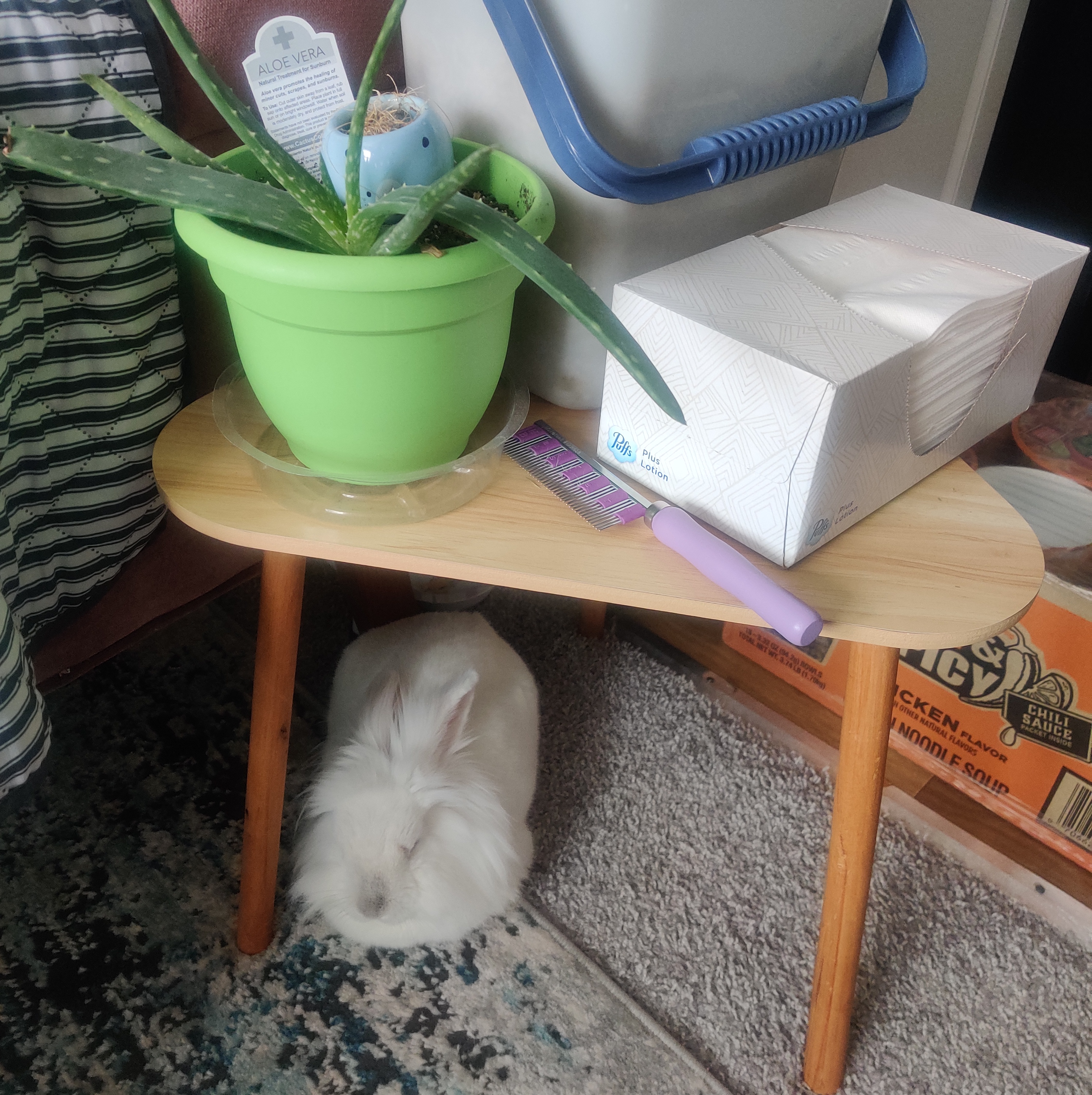
Routine establishing: Having a physical reminder of grooming makes it harder to forget brushing is essential for the health of your rabbit. I keep ours on a little side table, always within reach in our small one-bedroom apartment.
Cons
Cleanliness: While the purpose of the rubber band is to help collect hair, it seems like there’s always some stuck on there. If you’re a perfectionist, be prepared to go in with some tweezers to get the comb truly clean after a brushing session.
Price: I never thought I’d spend so much on a comb. Period.
Strangeness: Like I said, it took a few days for Baby to get accustomed to the feel of the brush. This is not an instant process.
Like using any tool around your bunny, it’s important to make sure you’re attentive when brushing your rabbit. My fear is that my eyes will wander to my phone, and I’ll accidentally poke Baby’s eye out. But it’s the same caution you’d need if you were, say, using clippers to trim your bunny’s nails.
Comparing the HairBuster to other methods
But the HairBuster is certainly not the only option for shedding rabbits. Here’s what we’ve tried over the years:
Using your hands: This has always been my go-to method because it’s the easiest and free! But the vet said this wasn’t good enough in Baby’s situation.
Wetting your hands: This option definitely works better than just using your regular old hands but still doesn’t do the job for Baby. He also hated having wet hair after.
Using a pet grooming glove: This was a big NO from Baby. He did not like the feeling, and the look of the gloves over our hands was too scary for him.
Using other types of brushes: We’ve bought a bunch of different types of brushes before and they just ended up being a waste. One pink brush in particular ended up becoming his nemesis.
Final Verdict
Each rabbit is different, so not every rabbit will need something as intense as the HairBuster.
For our family, it made sense to splurge on the comb – because of the vet mandate to upgrade from our bare hands and the great reviews it already had from other pet parents.
We’ll update this article once real shedding season hits again, but for now, we really recommend this comb for longer haired buns and those who have struggled with GI Stasis.
Have you tried the HairBuster for your rabbit? Let us know what you thought of it!
Stay Connected
Sign up for our newsletter through Substack. We’ll send updates about our latest blog posts and projects, so you won’t miss a thing!