Maybe a loved one got you a rabbit as a Christmas present. Maybe you got one for your birthday. Maybe you saw a rabbit at the pet store and couldn’t resist. Maybe you picked up a stray rabbit that was dumped by a previous owner.
While it’s not ideal, sometimes people end up with a bunny they didn’t expect would be in their lives.
Here’s a crash course on rabbit care if you find yourself in a situation like this.
Know the financial cost of owning a rabbit
Despite common belief, owning a rabbit is not cheap — if you’re doing it right, that is.
You may also want to consider getting pet insurance.
Know what to feed your rabbit
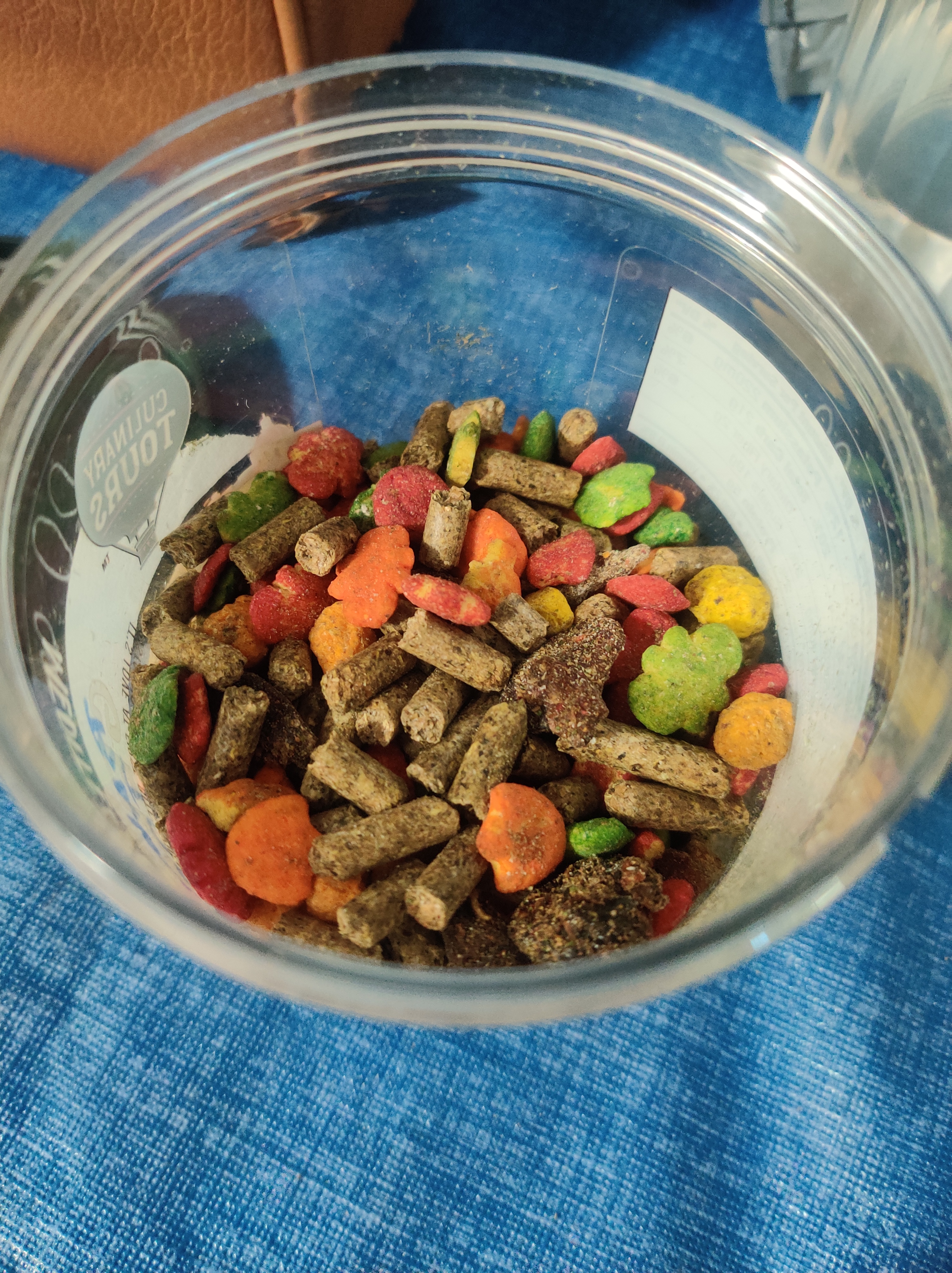
One of the most common mistakes new rabbit owners make is only feeding their rabbit pellets. It’s an easy mistake to make when even pet stores are giving out this false information.
Adult rabbits should primarily be eating timothy hay. If you’re allergic, you can always try oat or meadow hay instead.
You’ll also want to make sure you’re feeding your rabbit some veggies. And no, that doesn’t mean give them a giant carrot and call it a day. Cartoons like Bugs Bunny have been toting that narrative, but in reality, carrots are a bit too sugary to be their main course.
If you have a rabbit, please avoid keeping him/her in a cage 24/7. It’s like being quarantined in a small bedroom and never getting a chance to stretch your legs.
It’s even worse if you keep your rabbit outside in a hutch, exposed to the elements and potential predators. That’s very pre-2000’s rabbit care.
Ideally, your rabbit would be able to free roam. That means free reign of the entire house or certain rooms.
This isn’t possible for all pet owners. Some rabbits are extremely destructive. It may be for their own safety that they are only let out when they can be supervised.
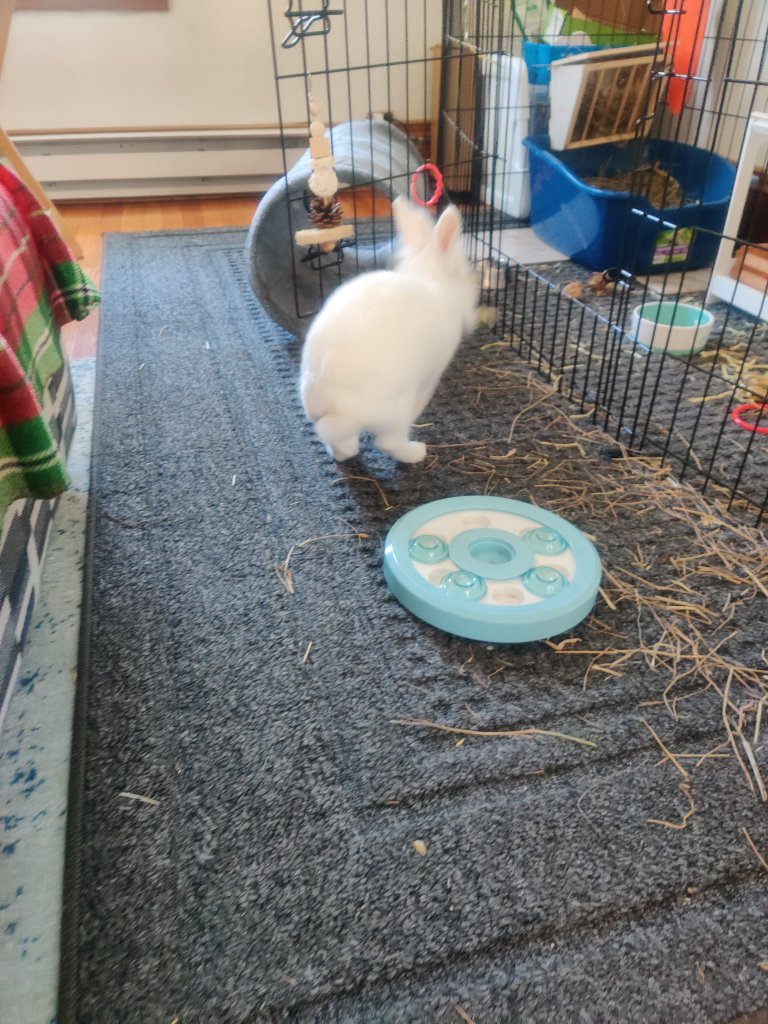
In these cases, it’s great to have a playpen set up with additional flooring underneath, like an area rug. This way your rabbit can have lots of room to move around, and you can have peace of mind that they won’t eat anything dangerous.
Either way, you’ll have to make sure the areas your rabbit has access to are rabbit proofed.
Make sure to:
Hide all electrical cords or wires
Gate off areas that are not rabbit proofed
Cover baseboards if your bunny is a chewer
Move house plants out of reach (some are toxic to rabbits)
Rabbits DO NOT need baths. It can actually shock their body to experience that. If they have a “poopy bum,” you can give them a sponge bath on their butt with a damp cloth to loosen the mess.
Make sure get your rabbit’s nails clipped regularly. If they’re left too long, the nails can get caught on things and break. It can also make it very uncomfortable for your rabbit to walk. You can either learn to clip your rabbits nails yourself by watching YouTube videos or take your rabbit to a professional. Some vets will clip nails for a fee as well as some workers are pet supply stores.
Litter train your rabbit
Rabbits can be taught to use a litter box.
Make sure to get a large cat sized litter box and fill with either paper bedding or pine pellet bedding. Steer clear of pine shaving, since that can be bad for your rabbit’s lungs.
You can give your rabbit a hint at what you want by placing some dropping in the bin and putting hay there. Most rabbits like to snack and poop at the same time.
How to get to know your rabbit
This is the fun part of owning a rabbit.
Get to know your rabbit and their personality by spending some quality time together. Just sit down on the floor while your rabbit is running around. Eventually they’ll get curious and come to you.
It’s important to establish that trust and not force anything. Remember, rabbits are prey animals, so they likely won’t take kindly to being smothered by a stranger. It takes time to develop a bond.
In the beginning, try not to pick up your rabbit unless necessary for grooming, vet visits, or emergencies. Most rabbits prefer having all four feet on safe, solid ground.
Nowadays, many people consider their pets a part of their family. We hang out with our pets after work, research the diet that will keep them healthy, take them to vet appointments, and even travel with them.
Many pet parents are also including their bunnies in holiday celebrations!
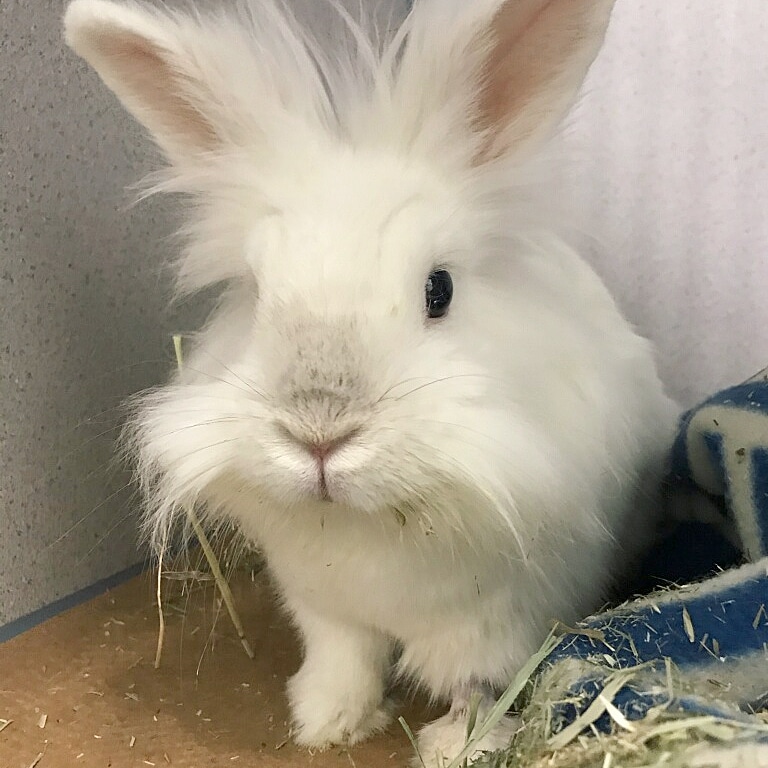
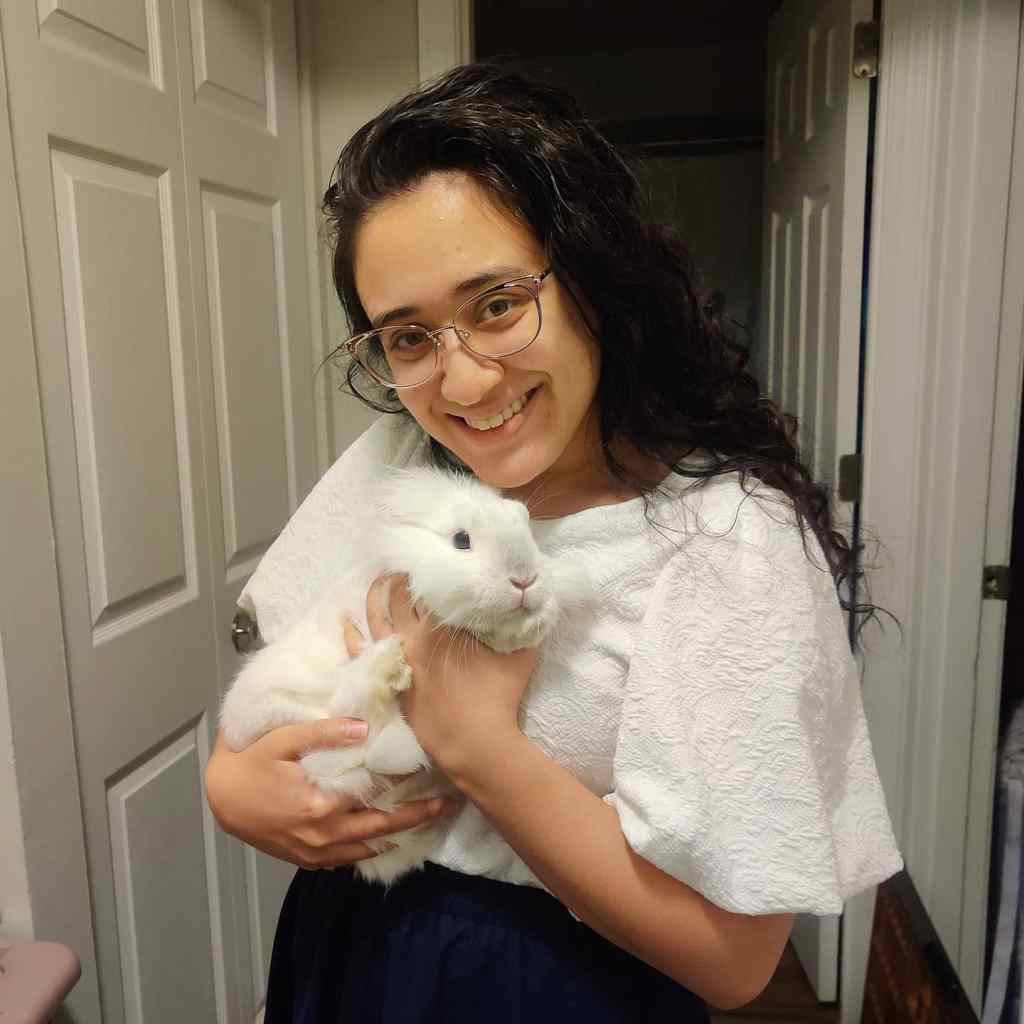
Baby, my white lionhead son, has been spoiled with most of these gifts. And I wouldn’t mind receiving (or treating myself to) these finds!
Here is the ultimate gift guide for rabbits and their human parents, updated with all the latest ideas!
For Bunnies
All bunnies are different! Some are easy to please, while others are very particular about their toys. You may have to try a few of these gifts right.
Something To Munch
This is a really great, cheap way to give your bunny something they love!
You know your bun (or can at least do a trial and error during advent). Pick your bun’s favorite treat, whether that’s a bag of dried papaya or a small piece of banana.
Put it in a gift bag and you’re good to go! Your bun will love it and so will your wallet.
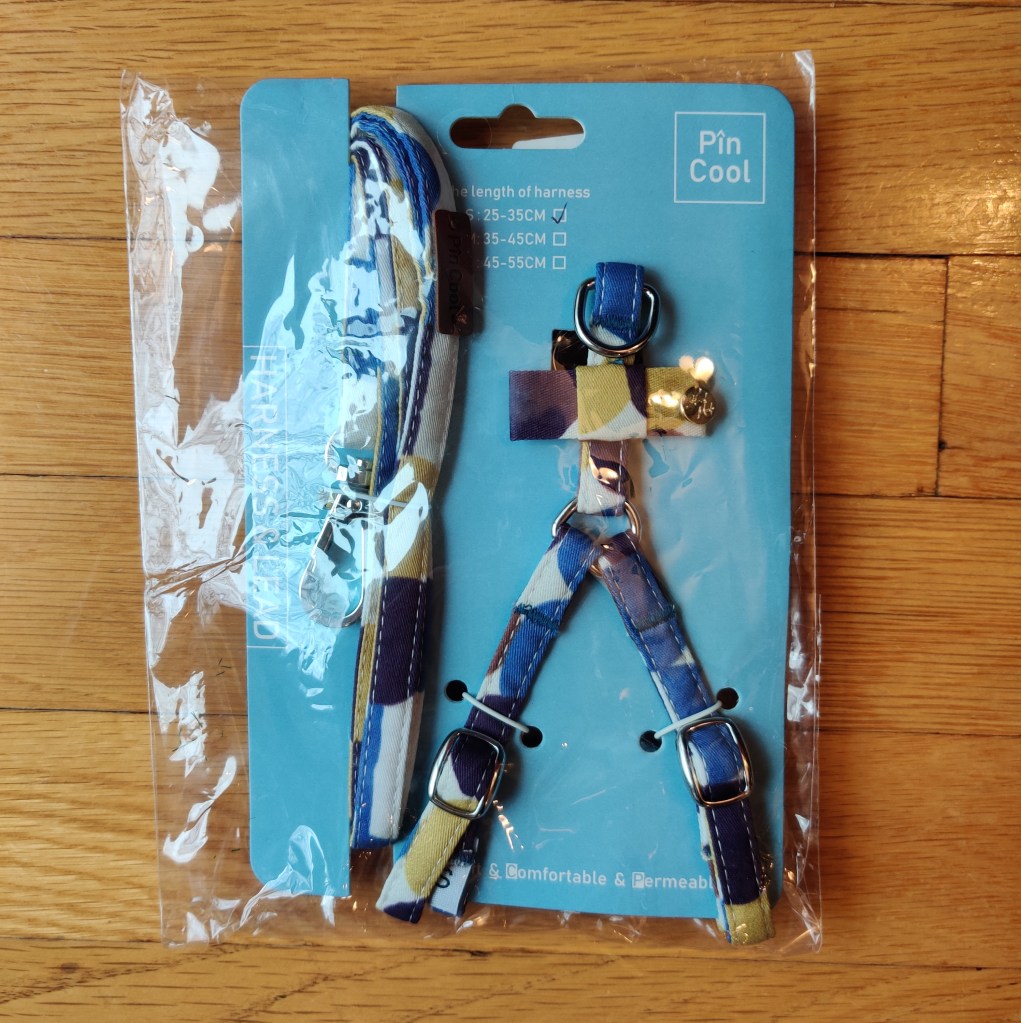
If you’re training your bunny to walk with a harness, a good harness is a must have.
I have tried so many different styles of harnesses with Baby. Some were definitely cuter than others, but from trial and error, it seems like Baby (and I) much preferred a step-in harness. It is easier for me to put on, and it has less bothersome fabric.
Here’s a cute harness I found on Amazon. It is super cheap and for girl buns, there are skirt attachments. We found this step in harness is just about the only type Baby will tolerate!
A Bird, Cat, or Baby Toy
The joys of having a bunny is that they can play with a variety of toys even if they are not specifically for rabbits.
Options include:
Hanging cage hangings: Typically these are for birds, but if you can find one specifically geared towards bunnies, buy that instead. It’s more likely to be safe for rabbits (no glue). I like to hang these from the playpen, especially by the entrances. Instead of biting the gate, Baby “fights” with these hangings. There are also larger ones you can hang that offer extra enrichment for your bun’s mind.
Baby keys or nesting cups: Although he prefers my real ones, Baby has his own set of keys to toss around. Some of our bunnies (crossed over the rainbow bridge) loved playing around with stackable rings and cups
There are a bunch of different types out there, but basically you’ll want to look for some sort of feeder, typically marketed towards dogs. The ones I’ve seen for rabbits have generally seemed too small, like the businesses selling them think bunnies are more like hamsters.
A puzzle feeder with sliders might be on the easier side for your bunny but a great introduction to the concept.
A Bunny Castle or Hidey House
There are so many options floating around.
Keep your bunny’s chewing habits in mind when you’re picking our a knook for them.
If your bunny does NOT eat cardboard and instead just shreds it, there are tons of cardboard holiday themed ones (great for photo shoots!). Target is a hotspot for these and are on the cheaper side.
If you want a more permanent option, you can also look into towers marketed towards cat owners. We got a second-hand cat tower for Baby one year, he slept in in every afternoon. We had to remove it after a couple years because he secretly started chewing at the sides.
Once we learned that Baby switched from shredding to eating cardboard, we opted for wooden bunny castles. One year we got a Small Pet Select castle, and Baby loved it just as much as his since trashed cat tower.
Since then, the company has designed a new model, opting for a build-it-yourself collapsible style castle. Small Pet Select also sells a wooden bridge, which could help make your Pinterest bunny paradise dreams come true. People in the Facebook groups I’m in have come up with some pretty cool configurations!
A Bunny Box Subscription
Boxes are a little pricey, but they do come with a lot of food and themed toys. There are a few different boxes out there, but here are two that pop up on my Instagram feed a lot.
Happy Bunny Club: This company has monthly, six month, or 12 month plans. It boasts safe ingredients and gives part of their profits to bunnies in need.
Bunny FunBox: This company ships out monthly boxes. It includes presents for bunnies and their parents! Bunny FunBox picks a small animal rescue to donate to each month.
For Bunny Parents
Bunny parents need Christmas gifts too! Whether it’s something you wear or something that helps their buntastic experience, they’ll love these gifts.
A Plushy Twin of Your Bunny
Whether you want a gift to memorialize a bun who’s crossed over the rainbow bridge or want a twin for your current fur child, you can get a customized stuffed animal bunny.
There are two big brands that I saw, and both are pretty pricey. Cuddle Buddies takes about eight weeks to create and two weeks to ship. You upload a photo and clarify some details about your bunny’s physical appearance. Petsies is a little cheaper, but, in my humble opionion, seem a little freakier from their product photos.
A Fancy New X-Pen
When you’re first starting out as a bunny owner, you might get those white wire cubes or a regular x-pen advertised for dogs.
If you want to step up your game this holiday season, opt for a uber trendy clear panel x-pen!
If you’ve been on Instagram or Pinterest recently, you know that some bunny parents go ALL OUT decorating their rabbit’s playpen. I know I have certainly gotten the green eyed monster after looking at some of the gorgeous photos.
There are lots of ways to decorate. Many parents will have a color scheme or mental plan. While you can really spill the big bucks to deck out a bun’s space, consider getting your bun lover accent pieces.
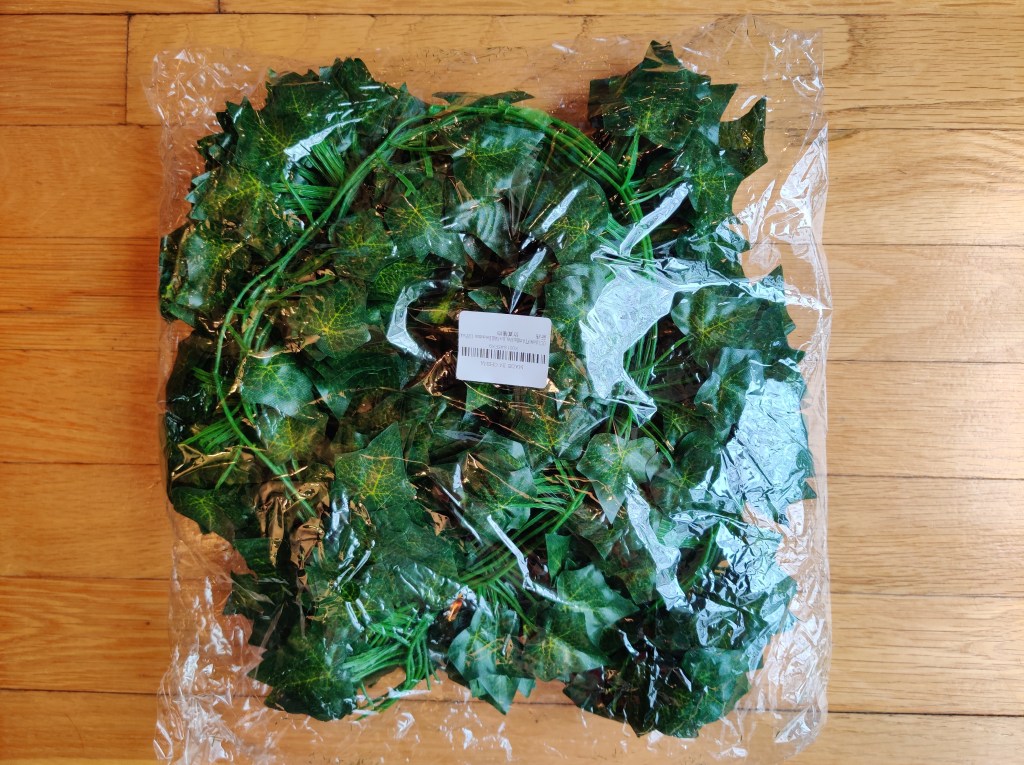
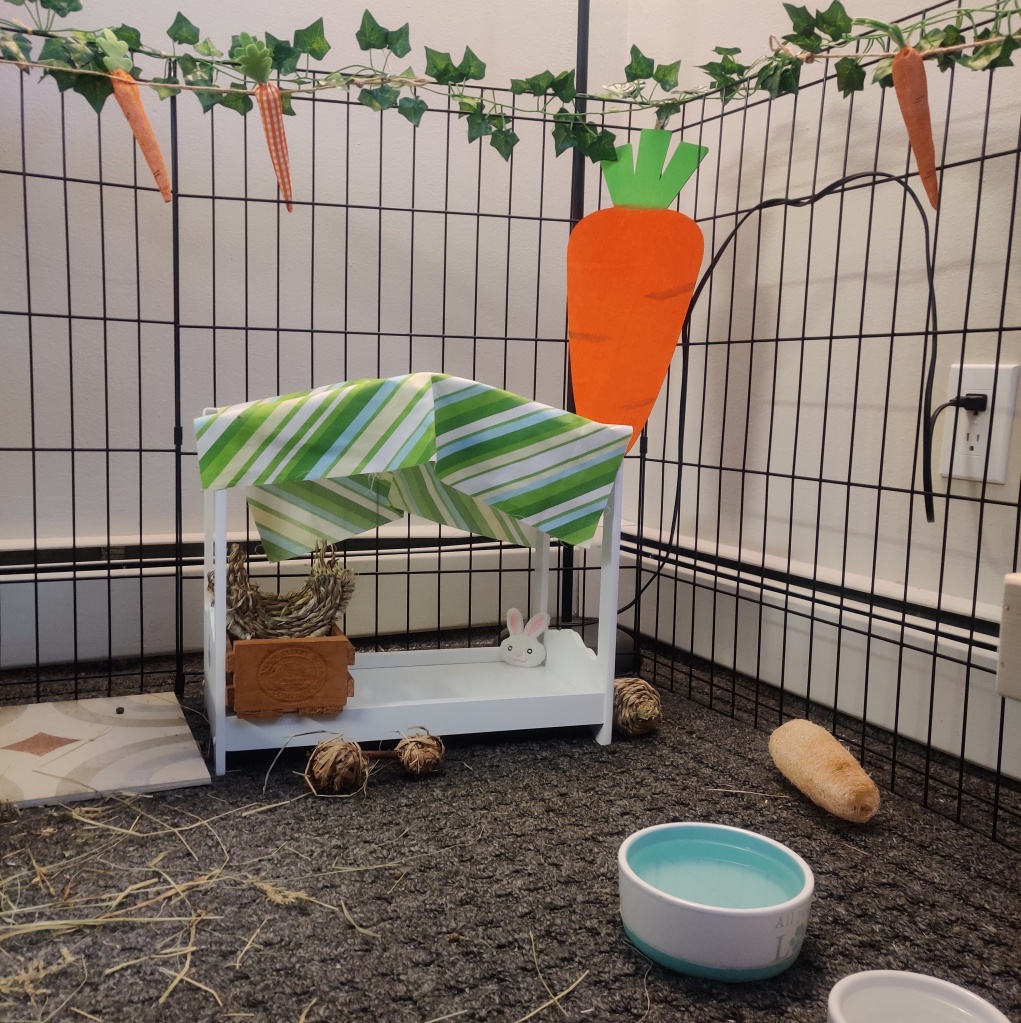
I shamelessly got myself these fake green vines for Christmas. I’d been eyeing them forever! They’re so cheap, and they add that extra pizzazz. Pair it with Christmas lights and BAM! Amazing!
Baby doesn’t care at all, but I look at it each time with joy!
Apparel and Jewelry
This one is easy with a quick Google or Amazon search.
Help the bunny lover in your life keep precious memories of their pet forever!
It can be as simple as buying a nice picture frame and actually printing out a physical picture of their bunny.
You can also get one of these more official momento kits, which include a no-mess dough to capture the bun’s paw print. We tried this out with Baby, and it was perfect! I didn’t even have to worry about his paw getting dirty from it. Just make sure you don’t wet your bunny’s paw like the instructions tell you too. It works perfectly fine without that step.
A Bunny Cam
Pet cameras are so much fun! Some bunny owners have been able to catch their first bunny flop or binkies on camera using one.
There are many different types, but I picked a Wyze Cam based on advice from other bunny parents. It’s a cheap camera that works well and includes night vision. The company also gives you 14 days of cloud storage for free!
While I was working in an office, I’d shamelessly have the livestream up, spying on my bun for signs of sickness and cuteness. It’s also been a lifesaver when we’ve gone on vacation and can let the sitter know when Baby’s litterbox hay is low. Another time, I even was able to pinpoint for a vet when exactly Baby hurt his paw by comparing different clips.
Fan Favorites
Cardboard Boxes
So simple and oftentimes free! One of our cuzrabbits Facebook followers suggested we add cardboard to the list!
Many wholesale food stores like BJ’s give out boxes in weird shapes. We’ve grabbed a few that looked like little huts!
Some furniture or appliance stores will give you big, broken down boxes if you ask for them. These are great for tunneling!
One of Baby’s favorite style of boxes is printer paper boxes. I’ve often cut out a small opening on one side and left the tops on. He’s spent days scratching and destroying the little caves!
With cardboard, just make sure your rabbit isn’t eating it. If there’s a hole in the box, you should see plenty of scraps around, proving it’s not ending up in their stomach!
Stay Connected
Sign up for our newsletter through Substack. We’ll send updates about our latest blog posts and projects, so you won’t miss a thing!
Note: As an Amazon Associate I earn from qualifying purchases. I get commissions for purchases made through links in this post.
cuzrabbits gets commissions from some of the affiliate links in this post. Support our education efforts by buying your pet supplies at Small Pet Select.
The cottagecore aesthetic, popularized by romanticized TikTok videos, is absolutely perfect for bunny lovers!
Cottagecore drips with nostalgia and a longing for a simpler life. Think “going back to basics” – baking bread, taking care of a backyard garden, learning how to knit, reading a book while on a picnic, etc.
It’s permiated many aspects of life, not only daily activities and hobbies.
Some people have taken to dressing cottagecore (florals, longer skirts, and puff sleeves). Others have transformed their homes (buying vintage furniture, hanging prints of botanicals, painting their walls dark green). There are even Spotify playlists that can help you get in the cottagecore vibe!
Common visuals include:
Mushrooms
Flowers
Herbs
Toads
And, of course, bunnies!!!
Launching myself headfirst into cottagecore, I decided to get Baby, my lionhead, on board!
What you’ll need
There’s no hard and fast rule whether or not something qualifies as “cottagecore.” I’d say the best thing is to look at your space and follow the vibes.
To give you some inspiration, here are some of the things I gathered:
Fake greenery: I didn’t want real plants in case leaves dropped and he accidentally ate one.
Christmas lights: Our apartment doesn’t have great lighting, so I draped lights around the top of his pen. They’re connected with the light switch so they’re off at night.
A string of fabric carrots: This can also be strung along the top of the playpen.
A wooden castle: Baby won’t be running towards it in slow motion wearing a flowing gown… but he could!
A canopy doll bed: He sometimes sits on it while he eats, but it’s too small to lay down on.
A woven basket: Baby doesn’t jump up on his castle, so I can put a basket on top of it with some extra toys in there. If it is in reach, just make sure the material is bunny-safe.
A miniature mailbox: It’s just adorable! No other reason!
Grass mats: We’ve found Small Pet Select‘s sea grass mats to hold out the longest against his super chewing. Couldn’t get it in time for the cottagecore makeover because it keeps selling out! But Amazon has another good alternative we’ve tried
Where to buy cottagecore props and decor
Cottagecore is all about vintage, so why not take advantage of that?
I’ve gotten the majority of my props from tag sales and flea markets. You’re almost guaranteed one-of-a-kind items that have serious character.
I was able to find Baby is very own little picnic set at a small flea market in Connecticut!
Keep your eye out for items for 18-inch dolls. Although not always the case, props for these dolls typically match rabbit proportions. This is how I found my canopy bed, the mailbox, and the cute little apples for sale sign/mini crate.
Another place to look is estate sales. These items are usually pretty cheap, especially if you go in the last hour. Sellers just want to get rid of the stuff at that point. There are oftentimes antiques or cute painting you can incorporate into your bunny’s space.
You can also check sales at craft stores. The best time to go is after Easter, when they’re trying to sell off all their carrot and rabbit themed inventory.
What type of castle to buy
There are some cardboard castles that you can construct at home, but we try to stay away from those. Some rabbits, including Baby, have a bad habit of eating cardboard instead of just biting it off. With his past issues with GI Stasis, we just don’t want to take the chance. For the money they cost, I also wouldn’t want a castle easily destroyed by bunstruction.
I got my castle from Small Pet Select! They’re really well made, so I don’t have to worry about it collapsing if Baby jumps on it.
The castle I have is open on two sides, so Baby doesn’t feel cornered while he’s in there. It also has little windows on the closed sides (spoiler alert: you will die from cuteness when your bun peaks out the window). The castle is hand-made with Kiln-Dried #2 Untreated Pine, so even if Baby did happen to take a nibble, he’s still safe.
Some bunny parents buy a couple castles and combine them with wooden ramps. This is a cool idea if you have a dedicated bunny room, but I’d suggest getting one to see how your rabbit likes it before splurging on a giant setup.
Small Pet Select Redesign
Small Pet Select recently switched up their designs, launching a whole new line of castle habitats.
Once you put it all together, your rabbitat should start to look magical!
Here’s a final look at Baby’s Bungalow:
cuzrabbits gets commissions from some of the affiliate links in this post. Support our education efforts by buying your pet supplies at Small Pet Select.
There are plenty of companies that market dangerous treats to rabbit parents by using a cute bunny on the packaging. They may even falsely say one of their products is especially for rabbits, despite including ingredients that can cause health issues.
I’m an experienced rabbit owner, yet even I have fallen for these marketing tricks.
So, how can you figure out which treats are safe and which you shouldn’t waste your money on?
Maria Lary of Texas worked at a veterinary office and decided to start her own Etsy shop AshyandCC. She shares some things that she considers when making treats for her shop and picking out food for her own rabbits.
How do you know whether the ingredients in treats are healthy for rabbits?
There are many different types of treats out there, like herb mixes, willow balls, compressed timothy hay cubes. When choosing between all these options, make sure to look at the ingredients on the packaging or the online listing.
Lary says she would double check with the exotic vet at her office to make sure certain foods were okay for her rabbit. But you can also do your own research, comparing packaging ingredients to lists of healthy foods on trusted websites.
“Google would be my best friend, searching on medically acclaimed websites,” Lary says.
Simpler, more recognizable ingredients are better, especially if you’re questioning whether a treat is actually healthy for your rabbit.
“Things that are too processed are bad for them,” Lary says. “If you see that a treat has too many ingredients, that is going to be a warning sign right there, especially if it’s ingredients that you don’t know what they are.”
Some good ingredients to look out for are:
Timothy Hay: Rabbits need all the hay they can get! It helps with their digestion and keeps their teeth trim.
Certain Tree Branches: Little branches and twigs can also give your bunny’s teeth a workout! Just make sure you know which trees are safe for your rabbit.
Certain Fruits: Since fruits have sugar, you want to make sure you don’t overdue it with treats that have foods like bananas and apples. But they can be delicious in moderation!
Certain Vegetables: Veggies are good for your bunny in general, but make sure you keep the carrot quantity in check. You may not realize it, but carrots are high in sugar too.
While researching, you may find that the safety of some ingredients are not as straightforward as others.
It may be better to take a more cautious approach.
“Things that are iffy, I usually just don’t feed them to my rabbits. Recently, I was looking into honeysuckle and adding those to treats because we have a huge honeysuckle growing. But I was seeing that there was conflicting opinions on what kinds are okay for rabbits and what are not. So I’m probably just not going to be including them,” Lary explains.
Which bunny toy construction techniques should you beware?
Even if a treat is made from healthy ingredients, it can still be dangerous because of how the treat may have been made.
Steer clear of toys or treats made with glue (which can be accidentally ingested) and wire (which could cut your rabbits mouth during chewing).
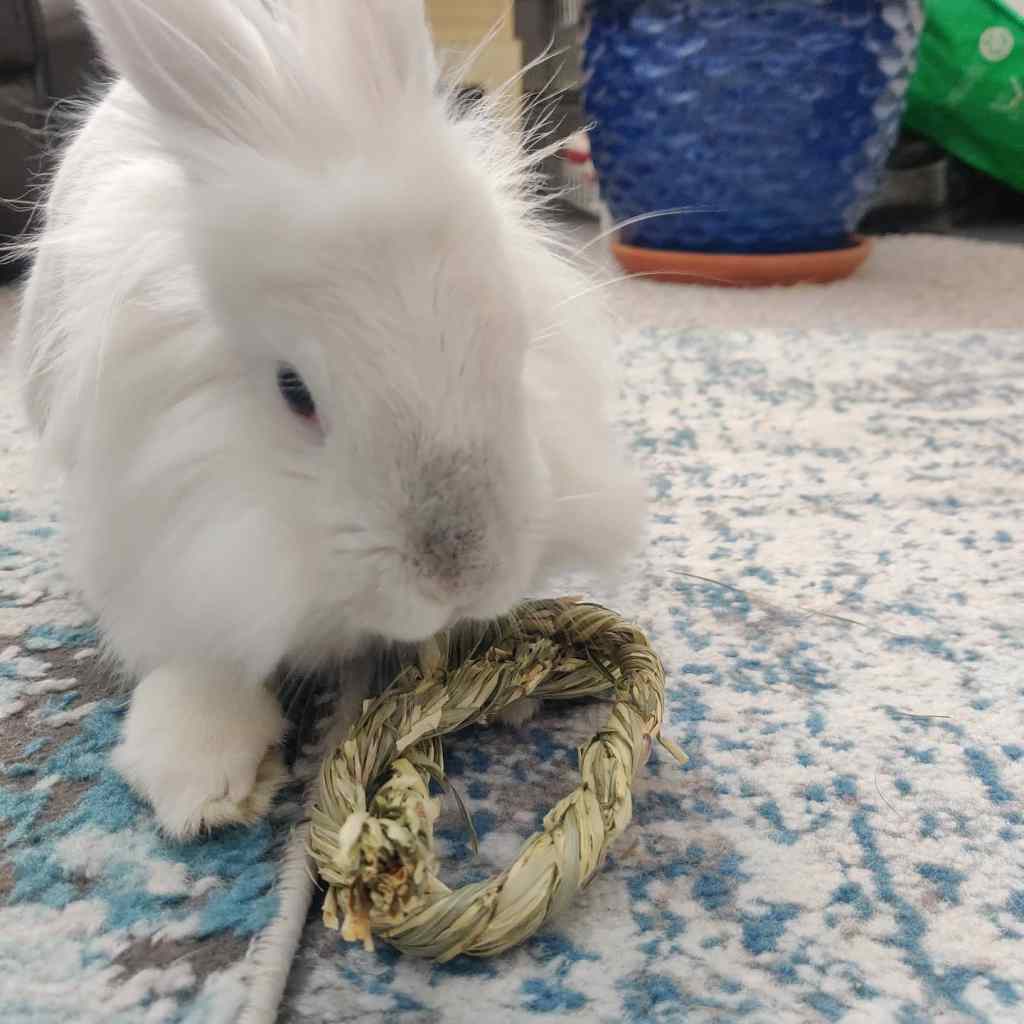
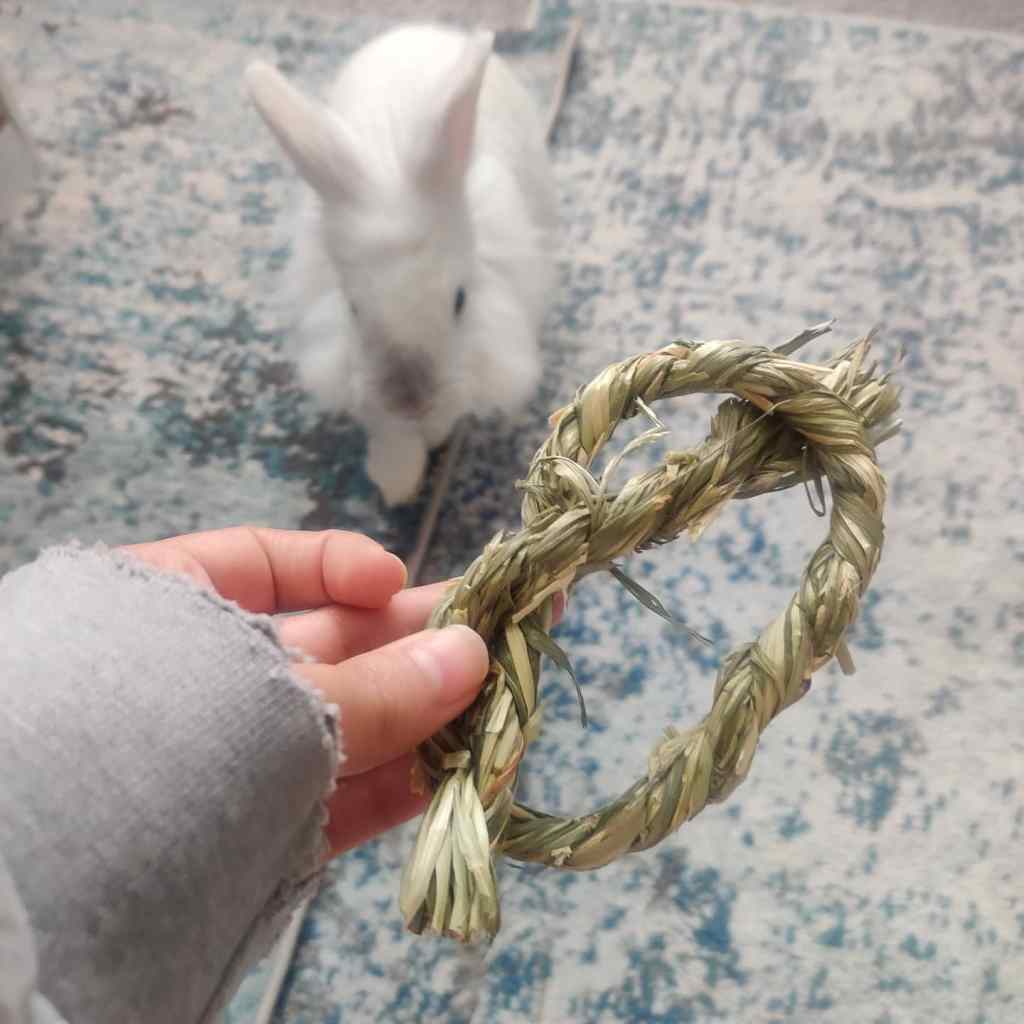
Braided or woven hay rings and mats may fall apart after a while, but these natural ways of keeping treats and toys together is much safer.
What are some rabbit companies and small businesses you can trust?
If you have no idea where to start, it’s worth researching the companies themselves.
Check product reviews before you buy.
Look at the comments on their social media posts. While every company will have some naysayers and the occasional angry customer, oftentimes people will call out companies online for their bad practices.
Here are some good options to get you started.
Companies and Small Businesses
Small Pet Select is a family owned business that focuses on transparency and quality ingredients. Many of their employees own rabbits themselves!
Oxbox is another respected rabbit supply company. It’s often recommended by vets and is known for its Critical Care products (given to sick rabbits).
AshyandCC is Lary’s Etsy shop and is relatively new on the scene. There are a wide variety of treats to choose from, and you can even order a box packed with treats and toys.
BinxBox is a well known subscription box for bunnies with monthly and bi-monthly options.
Your own household
You can also grow your own veggies to incorporate into treats.
“I would always look for healthy options that maybe I have growing in my yard. We grow lettuce, collard greens, kale, parsley, and lavender. We have a huge rosemary bush. So I have a huge variety of things that I can choose from that are free, available to me,” Lary says.
What are Baby’s favorite treats?
Over the years, Baby has been exposed to a bunch of different types of treats. While there have been a lot of misses, we’ve also discovered some favorites – that are actually healthy.
Right now, he’s obsessed with:
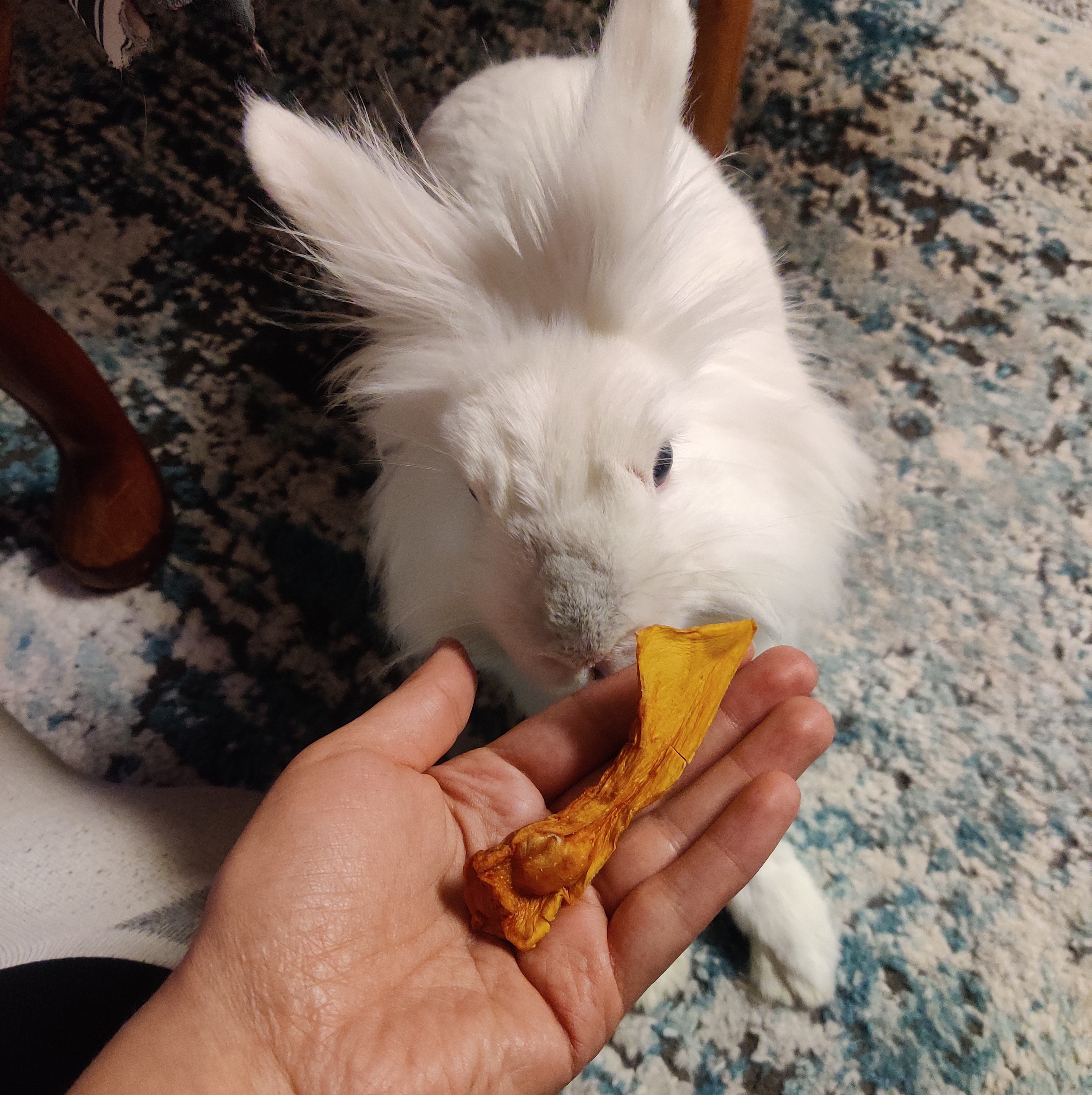
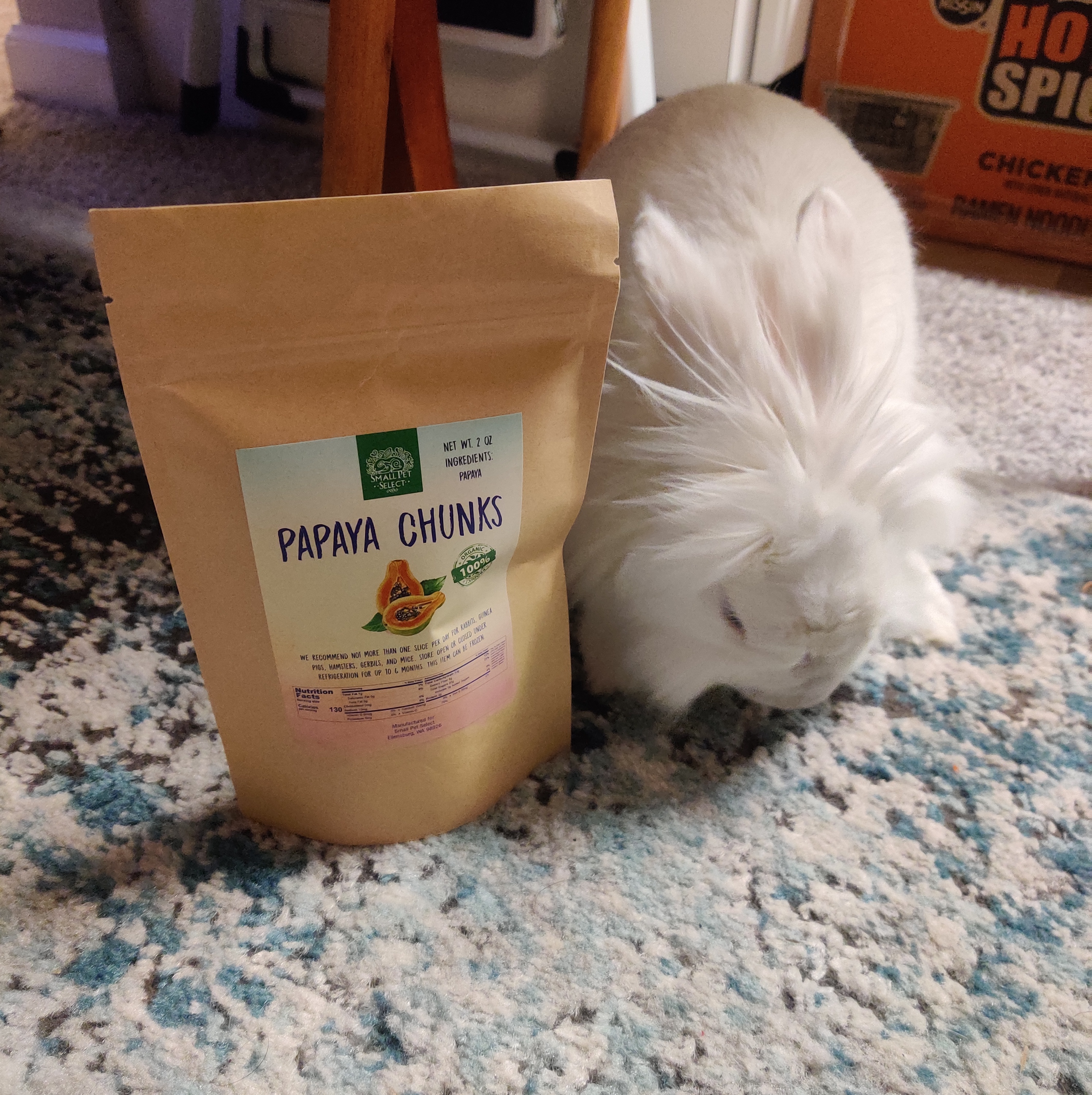
Papaya Treats: They’re delicious and great for his digestive system. We give this in moderation to prevent him from getting too much sugar.
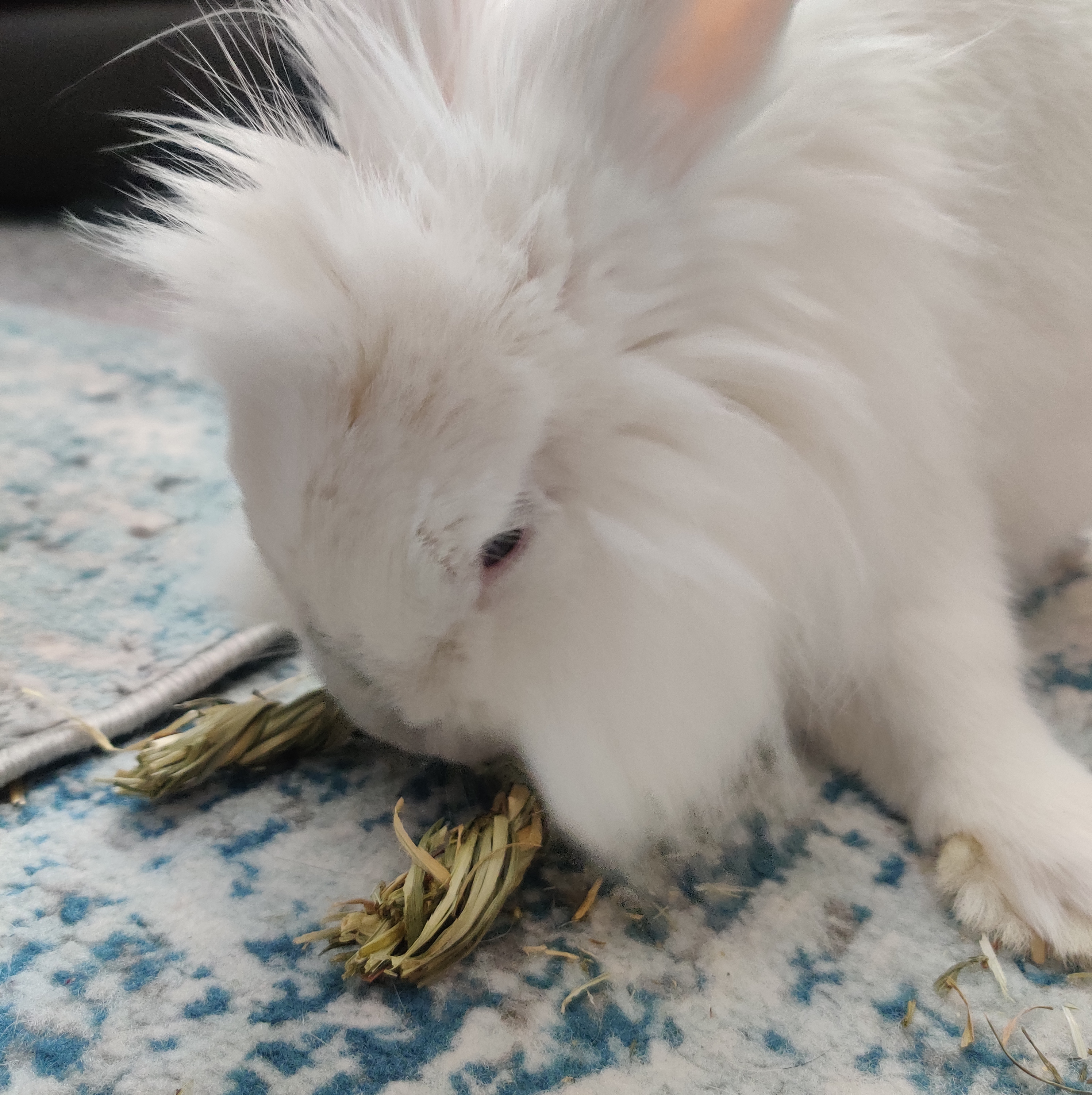
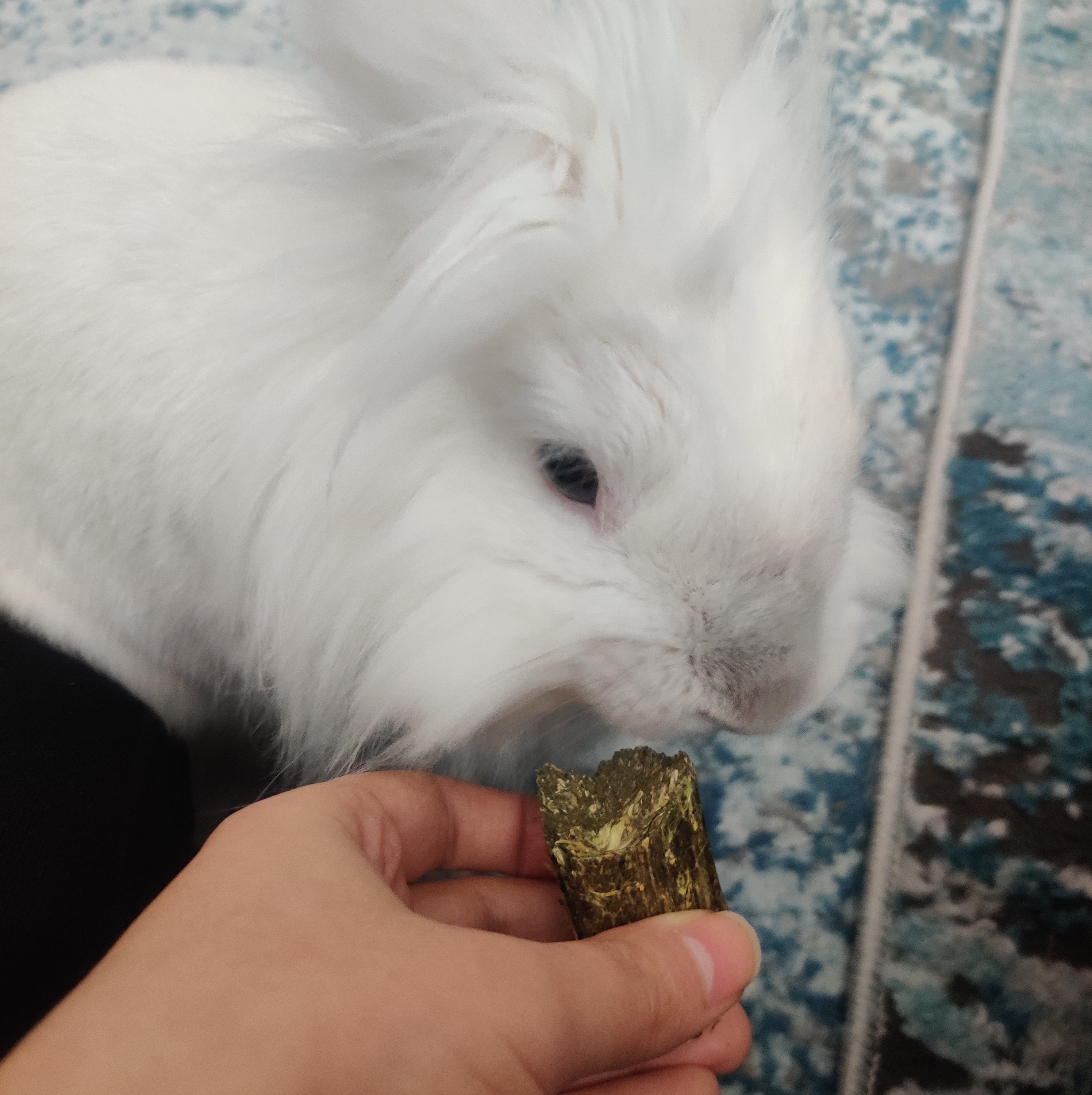
Timothy Hay Cubes: With a little trickery on our part, Baby is getting more hay into his diet. It took some time for him to get used to the idea, but now he loves chewing on these.
Have any treat suggestions for us and other rabbit owners? Let us know what your bunny’s favorite treat is in the comments!
cuzrabbits gets commissions from some of the affiliate links in this post. Support our education efforts by buying your pet supplies at Small Pet Select.
There are many people out there who consider rabbits “starter pets.”
While this may make most bunny parents cringe, it’s understandable to think that if you haven’t researched the breakdown of how much it actually costs to own one.
Aside from love and care, rabbits need things – whether it’s food, shelter, or toys.
And they may need services like medical care or nail trimmings.
I’ll break down what some of the costs related to rabbits are.
Keep in mind, with a lot of these items, you may find bargains of Facebook Marketplace or you may splurge on pricier items. So this isn’t going to be an end all, be all number.
Consider this a guide if you’re thinking about getting a bunny.
More experienced rabbit owners may find this as a resource for pampering your pet or finding money saving opportunities.
Food
Rabbits need three categories of food:
Hay
Pellets
Veggies
Treats
Hay
Rabbits are supposed to eat a bundle of hay about the size of their body each day.
Hay helps wear down their teeth and keeps their digestive system on track.
The cheaper option
Technically, adult rabbits only need Timothy hay.
Local stores and farmers sell Timothy hay by the bale pretty cheaply.
I can usually get a giant bale of hay for less than $10, and that can last my Lionhead about 3-6 months depending on how hungry he is from month to month.
WARNING: If you go this route, just make sure your hay doesn’t come from a state with known cases of RV2. (SPELLING) This disease can be transferred through hay and is very deadly to rabbits.
The pricier options
Depending on where you live buying Timothy hay online or in a pet store may be your only choice.
This can get very expensive, but some people like the smaller shipments, especially if you don’t have space to store an entire bale.
Some bags of hay in the store or online can be around $8 for a small bag. I try to get these when they’re on sale for around $5.
I only buy these types of bags in Orchard Grass and Oat hay as a “treat” for Baby. Only using 2-3 handfuls a day makes each bag last about 1-2 months.
$20 (Timothy hay) + $60 (Special treat hay)= $80
My approximate hay total per year is $80.
Pellets
This one, I barely remember what I get. Usually I will just go to Walmart and get a giant bag for cheap.
Lately though, I’ve become more cautious about how many pellets I feed Baby each day. Pellets really discourage Baby from eating all the hay he needs to stay healthy. We even have to keep the tub we keep the pellets in hidden or else he will beg for them. At one point he had even tricked my husband and I into each giving him full portions of pellets each day (like a sneaky child).
The supply I have now will likely last a year, since he only gets a small handful from me each morning.
Some rabbits are very picky about which pellets they enjoy. Some rabbit owners only trust certain brands or don’t have the space to store bulk buys.
Some options I know of:
Manna Pro: About $10 for 25 lbs. (This is what I would usually get from Walmart)
I’ve also tried the smaller package of Manna Pro Rabbit Feed when I lived in a smaller apartment with less storage. It wasn’t bad, and Baby seemed to like it because the pellets were longer.
My approximate pellet total per year is $10.
Veggies
We typically restock on veggies every other week, and meal prep the food into glass containers. Each night, Baby asks for his veggie dish by standing near the fridge!
We try to give him a variety of greens and vegetables to keep him interested. But his favorite is definitely parsley!
$4.39 (Romaine Lettuce) + $1.29 (Parsley) + $3 (Carrots) + $2 (Celery)= $10.68 every other week
My approximate veggie total every other week is $10.68. Per year it is about $256.32.
We discovered these timothy hay cubes when we were trying to get Baby to eat more hay. Because they come in a “treat bag” and can easily be carried off to a corner, Baby barely even notices it’s not an unhealthy treat – but just regular old compressed hay. The only downside to this is that when he really gets into eating it, the crumbling hay makes a mess. So more vacuuming is required. I’ve only bought one bag so far, but it’s lasted about three months. There’s still a lot more in the bag, so I’m thinking that’s two buys a year (about $5 each).
We also give Baby papaya treats. Our vet suggested it would help prevent GI Stasis by breaking down hair in Baby’s stomach. They come in long strips, but I cut them up into smaller pieces. He gets about a pinky nail size piece each day. I’m guessing each bag will last us about four months each, so I’m thinking we’ll end up buying 2-3 bags a year (at about $6 each).
$10 (Timothy Hay Cubes) + $18 (Papaya Treats)= $28
This is the category that you can either go really cheap or really fancy.
Look on Pinterest and you’ll see so many deluxe rabbit rooms with giant bunny castle setups and coordinating colors. There’s not really a limit to how bougie you can make your rabbit enclosure.
I’ll try my best to estimate what my current set-up costed, since I consider Baby’s area to be somewhere in the middle. It’s pretty simple, but does spoil him a bit.
I will not give a cheapo option, because I don’t support only caging bunnies with no free roam time.
What my setup costs
Things have changed over the years as I’ve learned what Baby likes and what he makes it his mission to eat versus enjoy. Some things have gotten their wear and been thrown out.
But here’s what’s in Baby’s pen now:
Rug: I keep a rug under Baby’s area in case he accidentally misses the litter box. I’ve also lived in apartments with only hardwood floors, which he treats like lava. I think I paid about $25 for it five years ago.
X-Pen: I got a pet playpen off of Amazon for about $45 (on sale). I’ve never had a problem with it. The pen is big enough for me to not feel bad leaving him in there overnight or when I’m not home.
Water Bowls: I don’t want to get into the whole bowl v. bottle debate, because we already looked at the research. Right now, we have a two bowls – one in his pen and one just in the living room for when he’s roaming. I don’t remember what I paid, but it couldn’t have been more than $5 each on sale.
Bed: Many rabbit owners have the famous Ikea bed, but I got the canopy bed at a tag sale for $5.
Litter boxes: Like the water bowls, we have two – one in the pen and one in the living room. One is just the bottom of a carrier that I got at a tag sale (likely also really cheap, but it’s great because the sides are so high). I got the other litter box at Walmart for under $10.
Castle: This was my one big splurge. Before, we had a secondhand cat condo for him to snuggle in (soooo cute). But then we realized he was secretly eating the cardboard lining inside. A bunny castle was the safest alternative we could think of, since the wood is safe for rabbits. Small Pet Select has since created a simpler version of their bunny castle, which seems more portable and better for apartments.
That’s the basics.
I also have random seasonal decor that I’ve bought from the Dollar Tree or random after-Easter sales on Michael’s and Jo-Ann Fabrics. I won’t include these in the total because these are more for my personal enjoyment. Baby definitely does not care about the ✨aesthetic✨ of his space.
Over five years, Baby has been through a lot. Here are some medical costs to consider:
Neuter
Yearly routine visits
Sprained leg
GI Stasis
This random time I looked on the internet and convinced myself he had a horrible disease when it was nothing.
I’d guess all of these things totaled up to about $10,000.
Luckily, I’ve always had an emergency savings account set aside for Baby and regular emergency money. So I was never unable to pay for care.
The sad things about medical care costs is that sometimes people are unable to spend thousands of dollars at a moment’s notice. From stories I’ve read on rabbit Facebook groups, some owners opt for health insurance through Nationwide while others have to stomach $15,000 in bills from ONE medical emergency. Some have even had to put their rabbits down or let them pass away at home because they could not afford care.
My approximate medical care total is $10,000.
One hospital trip left Baby with a shaved leg!
Extra spending
There are some things that are not necessarily necessities when it comes down to it. Depending on your circumstances and your knowledge of your rabbits preferences, you may not spend as much money on some of the following categories.
But you should definitely consider these things when considering just how expensive a rabbit can be.
Bunny Proofing: Each house/apartment requires something different, and each bunny’s destructive habits are different. For Baby, we’ve bought extra rugs as a precaution to protect the existing carpet. We’ve gotten free white cube stacking grids off of Facebook groups that we’ve used to block areas off. I’ve bought special tubing for cords that have to be in the open. This accumulates over the years and some things have had to be replaced or reinforced. I can guess I’ve spent around $200 over the years rabbit proofing various living spaces.
Toys: Technically a rabbit doesn’t need toys to live. But if you’re going to own a rabbit and not give it a SINGLE toy, you are a total monster. I’d say I’ve spent about another $150 on random toys (edible and plastic) since getting Baby.
Random Decorations and Photo Props: It’s difficult to guess what I’ve spent on decorations. Over several years, I’ve scoured tag sales, flea markets, clearance racks, and dollar stores. A random guess would be another $150?
Bunny Presents: Yes, I’m one of the rabbit owners who will buy her bunny Christmas presents and Gotcha Day presents. I’ve even made a bunny veggie “cake” and sang the Happy Birthday song to Baby. Over five years, I’d guess I’ve spent another $200 on these random things.
Failed Attempts: There have also been a bunch of things that Baby has not particularly enjoyed that I’ve “wasted” money on. If he doesn’t eat a whole treat OR I find out later it is unhealthy for him OR if he doesn’t even look at a new toy, it’s a fail for me. I’d say I’ve spent about $100 on random things that I’ve had to toss, donate, or resell.
Nail cutting and grooming: Some people pay for these services at local clinics or fundraisers. I just do them myself at home, so my cost is at least fixed. A HairBuster comb cost around $20, and nail clippers were probably a few dollars.
My approximate misc. spending total over five years is $823.
The approximate cost of owning Baby over five years is $12864.60.
That is an absolutely mind blowing number.
I have to remind myself that over five years, it’s easy to spend that much – especially since a lot of stimulus checks and tax returns went towards Baby’s care. And any other pet would likely cost something similar if not higher.
I love Baby, and if I had the money, I’d likely spend even more on him. In all honesty, I likely have spent more than that with random purchases I may have forgotten about. I’d give him the best bunny dream life I possibly could, with all the yummy treats and all the wooden tunnels and hidey-holes.
Every rabbit and rabbit parent is different. You may spend more money on your rabbit. You may spend less money on your rabbit.
Either way, it’s important for new owners to be aware that all pets cost money.
There’s no “I actually love my rabbit” spending threshold, but you should want to give your bunny a happy and safe life. Care goes beyond love and attention (which they also need).
Pet bunnies need owners who go into the process well researched and with the practical means to support them.
Stay Connected
Sign up for our newsletter through Substack. We’ll send updates about our latest blog posts and projects, so you won’t miss a thing!
Note: As an Amazon Associate I earn from qualifying purchases. I get commissions for purchases made through links in this post.
cuzrabbits gets commissions from some of the affiliate links in this post. Support our education efforts by buying your pet supplies at Small Pet Select.
Your rabbit is an important member of your family. When they get hurt or sick, it can be extremely stressful – not to mention a big financial burden.
During times like these, many pet parents turn to their faith for support.
Saint Francis is very well known as a great Catholic who had a special love for animals. He likely gets the most asks for intercessions on behalf of pets in general.
But did you know there is a patron saint for rabbits?
We’ll explore the life of St. Melangell and some prayers you can say for your sick bunny.
The Basics of Patron Saints
For those of you who may not be as familiar with the concept, a “Saint” is someone who has been verified by the Catholic Church as having a close relationship with God and being in heaven.
After their death, the Church goes over the person’s life, looking at their writings, their life, and sometimes even talking to people who knew them. The process can take decades, because it is so thorough. Sometimes miracles are required for them to pass through certain stages.
Catholics don’t necessarily pray to saints. They pray for their intercession. It’s kind of like when you ask any living person to pray for you – except a saint would have a closer connection to God.
When we say someone is a “patron saint” of something, it basically means they “specialize” in a certain cause.
Tradition says her dad wanted to marry her off to a nobleman, but she took a vow of celibacy. Melangell ran away to become a hermit in the Tanant Valley in Northern Wales, which was outside her father’s domain.
Apparently she lived in a cave for 15 years, eating berries and nuts. Not exactly the life you’d expect a princess to lead.
In 604 A.D., the prince of Powys, Brochwel Ysgithrog, was in her neck of the woods. He and his hounds were hunting a rabbit.
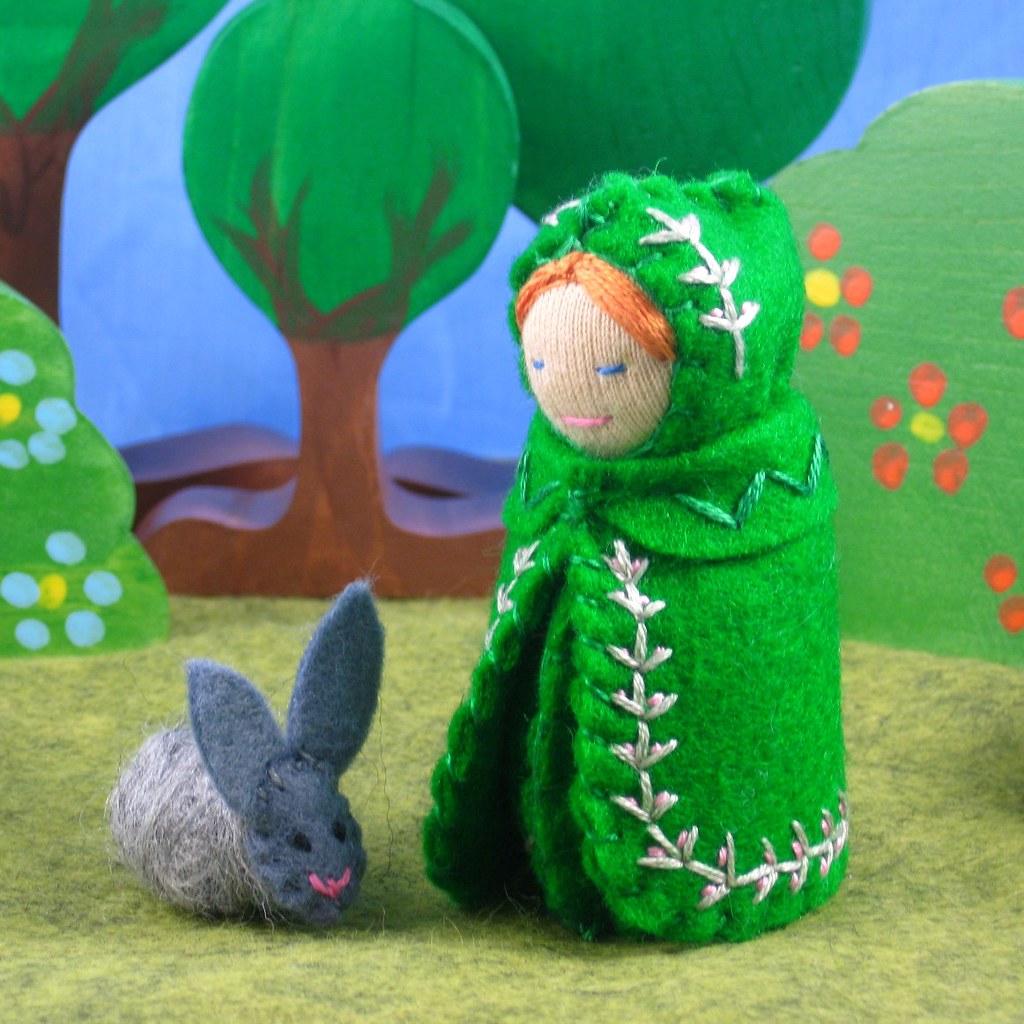
The rabbit ran under Melangell’s cloak. She had been in a thicket praying.
The dogs ran away and wouldn’t attack the rabbit.
Some sources say Brochwel asked her to marry him (she was very beautiful), but she gave a pass on that offer.
Brochwel was impressed with Melangell’s courage either way, so he gave her (and God) the whole valley as a sanctuary.
The sanctuary applied to people and animals, so for centuries, no one hunted small animals in the valley. It was said that yelling “God and Melangell be with thee” also saved rabbits being chased by dogs.
From there, Melangell founded a small religious community and served as the Abbess (the leader of the nuns) for the next 37 years.
They buried her in a chapel of a nearby church called Pennant. The church was later renamed Pennant Melangell in her honor, and there are carvings of hares in the church.
During the Reformation, the church was destroyed. People hid her relics (her bones) in the church to protect them. The bones were thought to be lost, but they were found during the church’s restoration in 1992.
She was also known as Monacella, which is the Latin translation.
The hare became a symbol of peace and sanctuary.
Random St. Melangell “merch”
Here are some St. Melangell things I found across the interwebs:
St. Melangell t-shirt: There are also a bunch of long sleeves and sweatshirts that have the same graphic design. There’s also a phone case and pillow with the design.
8×12 artsy poster: I’ve seen this image on Pinterest a lot and love it!
Free 8.5×11 printable: Click the PDF in the right margin of this site to download. It’s essentially a jumbo prayer card.
Book of poems about St. Melangell: It only has a few reviews, but everyone seemed to enjoy it! Pricey beyond my wildest dreams though…
Holy Card and Pendant Gift Set: This is on Etsy, so it seems like a good way to support small business owners and get your rabbit fix. She looks a bit too serious in this one for my taste though!
Prayer
Praying is just like talking.
You can pour your soul out. You can cry. You can beg. You can ask for things.
There are no rules.
When you pray for the intercession of St. Melangell on behalf of your rabbit, you can just say what’s on your heart.
You know that St. Melangell understands and values all creatures, no matter how small.
While others may scoff at your concerns with the classic “It’s just a rabbit,” St. Melangell will take the matter to God in heaven. As the patron of hares, the welfare of your bun is of special importance to her.
In case you are at a loss for words, here is a prayer you can say in your time of need:
Dear Melangell, please watch over my rabbit, (insert name here), just like you did that hare so many years ago.
No matter is too small for God, who loves us so much.
We know all life is precious because each one was made by God.
Please bring our cause before God and remind him just how much we value his little creatures.
Whatever happens, help me to understand God’s will and feel his loving support.
Help me find peace.
Amen.
Intercessions
Do you need some prayers?
Comment your intension (what you need help with), and we’ll join our prayers with yours as a rabbit community.
Note: As an Amazon Associate I earn from qualifying purchases. I get commissions for purchases made through links in this post.
Stay Connected
Sign up for our newsletter through Substack. We’ll send updates about our latest blog posts and projects, so you won’t miss a thing!
Rabbit ownership has evolved dramatically over the last two decades. It feels like this is just another crazy transition millennials have experienced.
We went from using floppy disks in elementary school to just saving everything onto Google Docs in college. We also went from thinking rabbits were fine in a wire bottom cage outside to rabbit proofing our homes so they could freeroam.
So it makes sense that as a society, we’d learn a lot more about our rabbits’ ideal diet.
But even the most experienced rabbit owners make mistakes.
Some companies specifically market unhealthy foods to rabbit owners. A trusting owner may pick something up with rabbits all over the packaging, assuming the company wouldn’t throw anything bad in it.
Alas, we do not live in a perfect world.
Here are some of the worst products I’ve bought and fed my rabbit (before finding out how bad they really were).
While it won’t kill them instantly or anything, too much seeds and grains in their diet and a rabbit could face:
Obesity
Excessive fat in the liver and arteries
Fatty Liver Disease (which can be fatal).
The House Rabbit Society explains it better, but the starchiness of these foods can also lead to GI stasis.
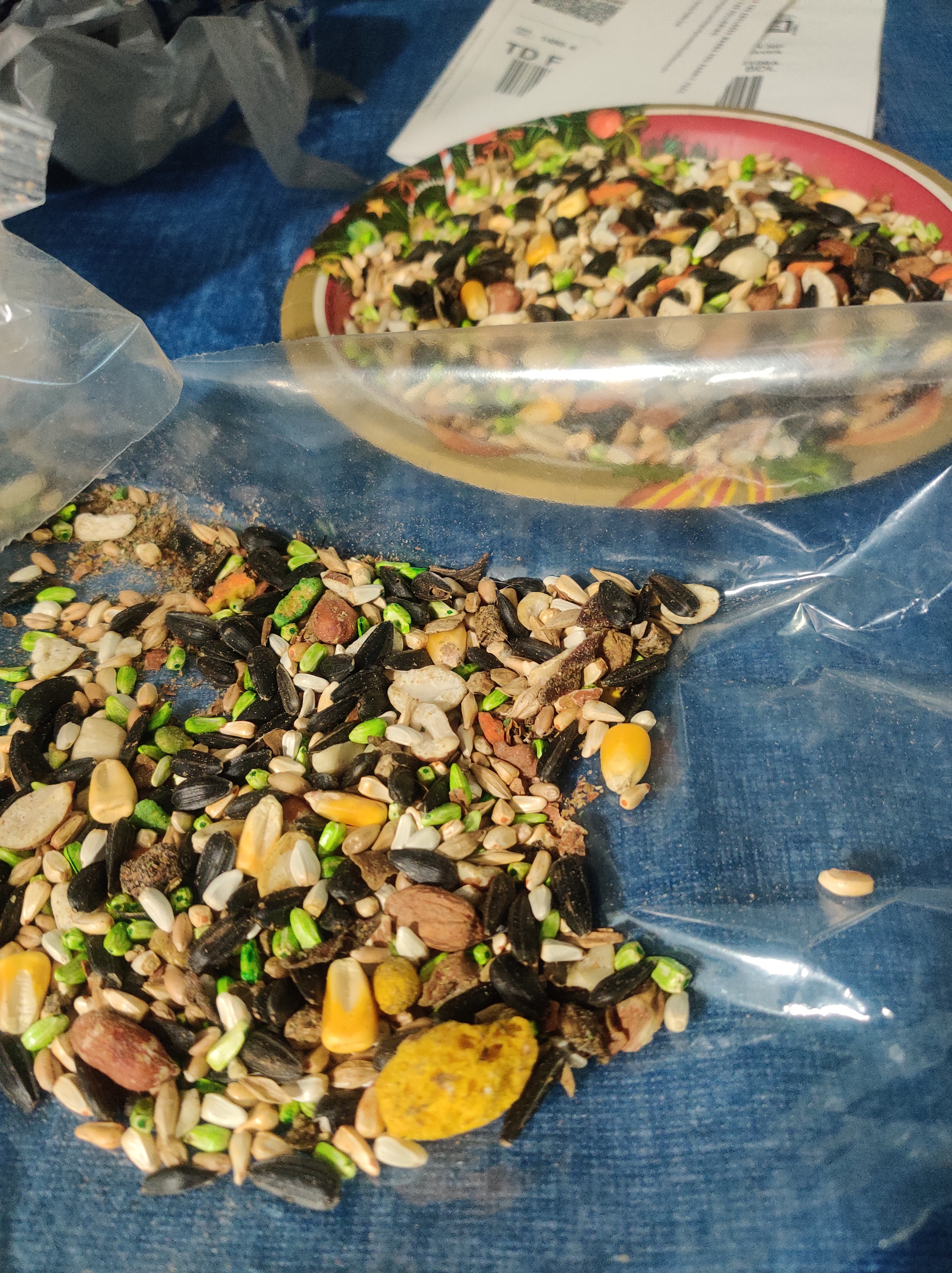
Wild Harvest: Mixed Berry ‘n Nut Mix
I’m really kicking myself on this one.
I honestly should have known better. But the fun colors on the packages, the FACT THAT THERE IS A RABBIT ON IT, and that it was only a few dollars blinded me.
According to Wild Harvest, this treat has a “flavorful array of real berries, nuts and seeds such as alfalfa, corn, carrots, strawberries and wheat.”
Ya. Riiiiggghhht.
After doing some more research online, I found out how bad seeds were for them. And I didn’t even know how to identify some of the other things.
I ended up taking an hour to separate the “poisonous” from the “bad but not necessarily deadly.” Most of it ended up being the latter.
What I thought was a steal ended up being a potential deadly rip off.
Wild Harvest: Stuffed Logz
Originally, I was so happy when I got this! It looked great and wasn’t too expensive. Baby LOVED it and would just be chomping away at it. This treat seemed him a great way to get his teeth naturally ground down a bit.
But then I looked at the ingredients.
Again, according to the company, this treat is “Stuffed With Alfalfa And A Gourmet Seed Blend.”
And the first ingredient listed is “pine wood shavings!” WHAT IS THAT????
Rabbit experts don’t want you using pine wood shavings as bedding, let alone literally feeding it to your bun in the form of a treat!
Not taking into account the whole “Ooo, I don’t feed my rabbit artificial flavorings” sentiment, this treat is not healthy for your rabbit.
Kaytee: Forti-Diet Natural Chew Log
This is the most egregious instance of evil marketing.
Kaytee says the Natural Chew Log “supports dental health by encouraging chewing and will provide hours of enrichment for your small animal.”
But again, it has seeds inside that are not good for your rabbit.
As evidenced in these photos, Baby loved this treat! But rabbits don’t always know what’s best for them.
Just like you wouldn’t knowingly let your kid eat dirt just because they like it, you can’t just expect your rabbit to have a health conscious sixth sense.
So how do you know what food is safe for your rabbit?
Whatever you buy for your bunny, it’s important to do your own research.
While I support these bunny brands, it’s your responsibility to understand ingredients and your bunny’s needs.
You.
Not the rabbit group you belong to on Facebook and not the random relative who bought your bun something because they were being nice.
Read the ingredients. The simpler the ingredients, the better!
As your rabbit-savvy vet if you have doubts about what you’re feeding your rabbit.
There are generally two companies I trust when it comes to rabbit food:
Oxbow: They’re generally considered the big giants of the pet food world and very well recommended by rabbit owners.
Small Pet Select: This company really goes for healthy options and have done their research to make sure treats and toys are not harmful.
What companies do you like? Are there any products that YOU want to warn your fellow rabbit owners about?
Let me know in the comments!
cuzrabbits gets commissions from some of the affiliate links in this post. Support our education efforts by buying your pet supplies at Small Pet Select.
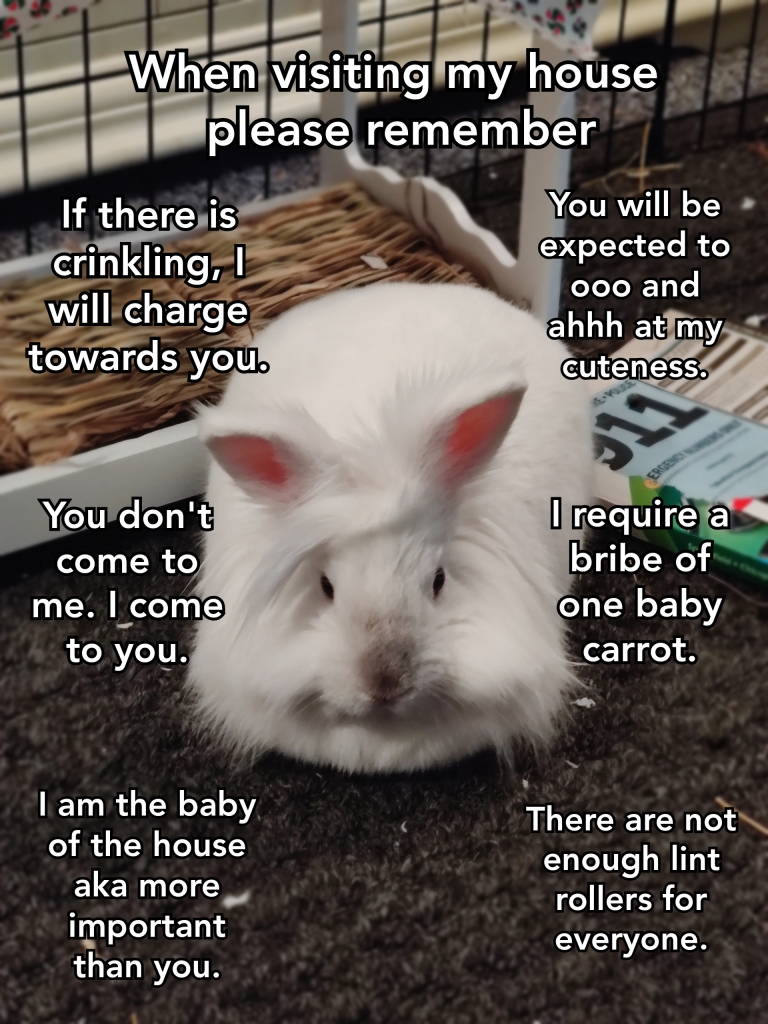
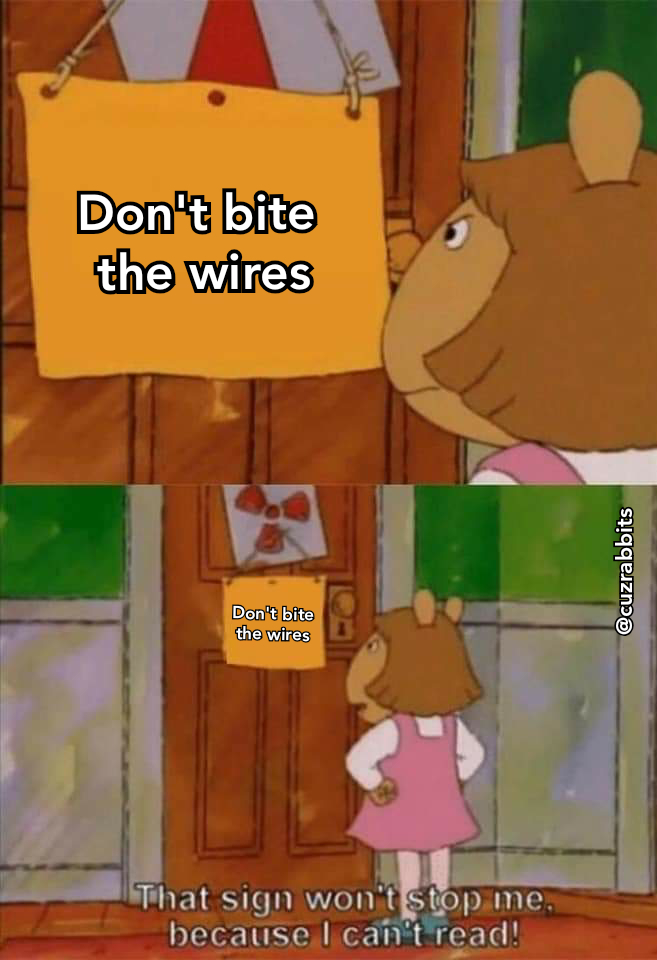
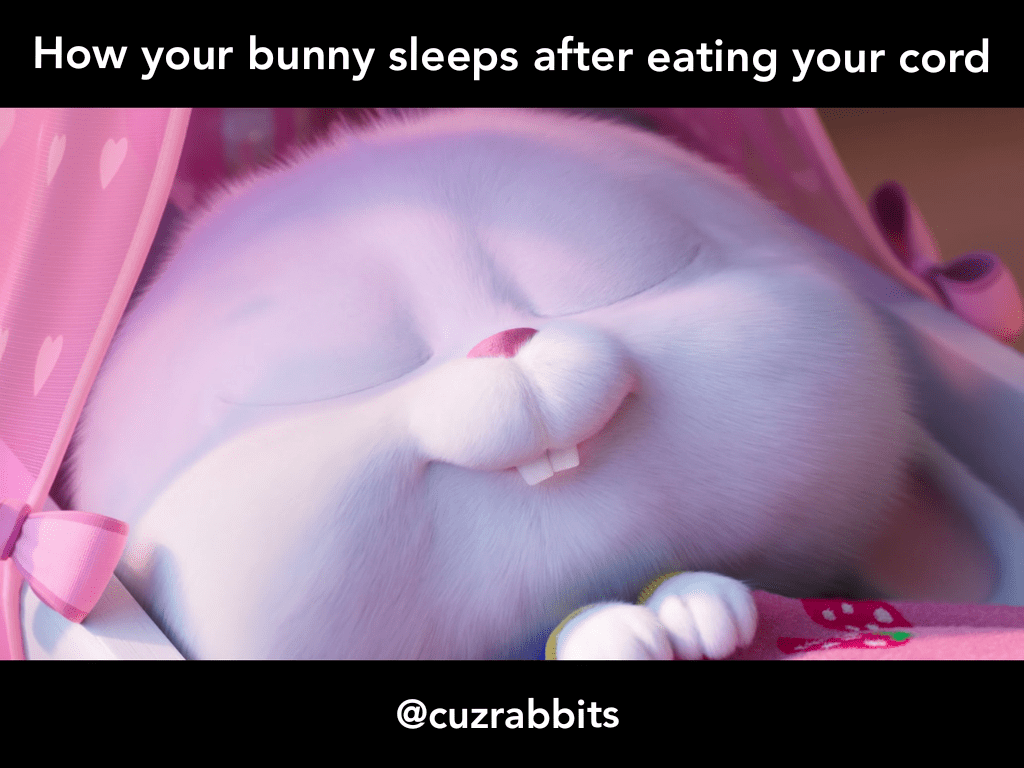
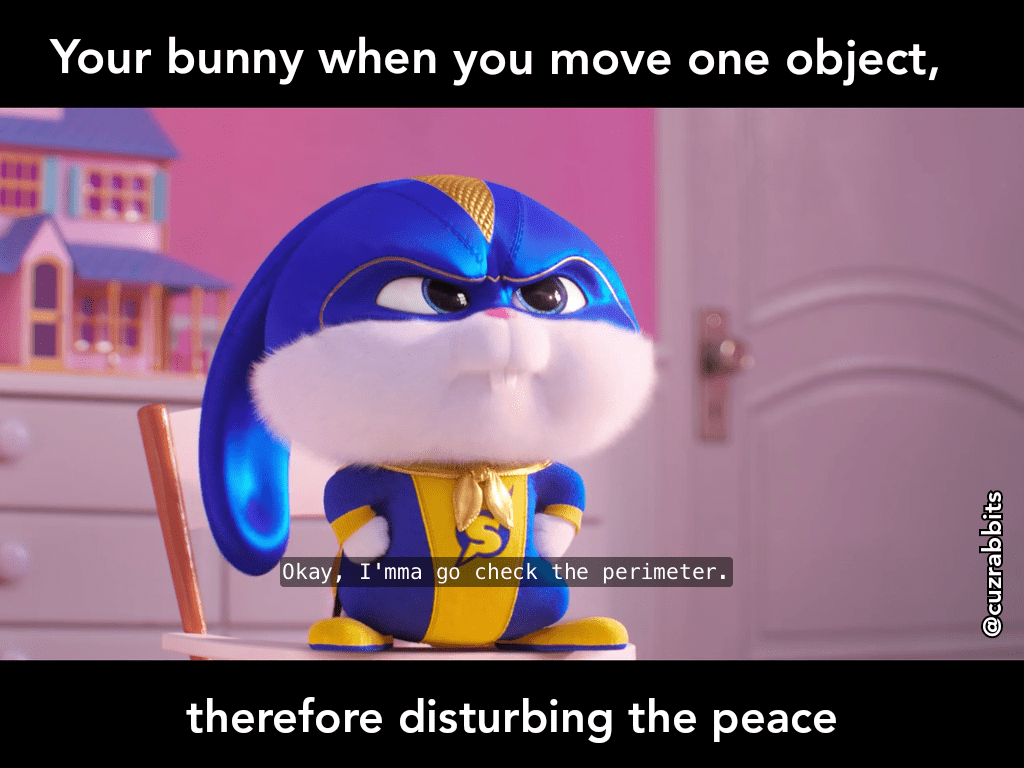
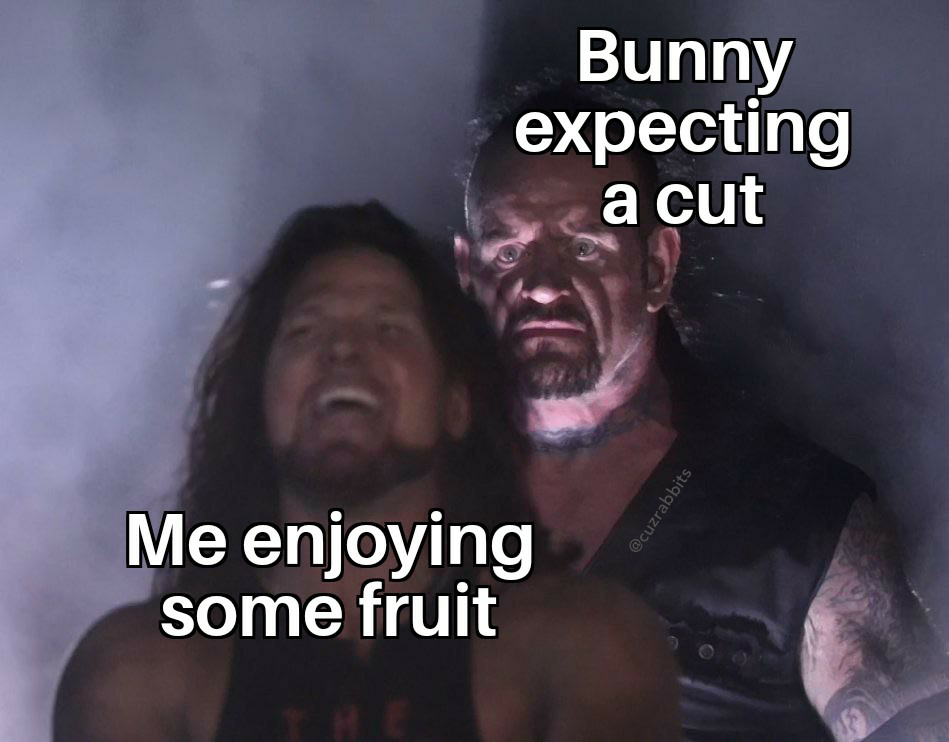
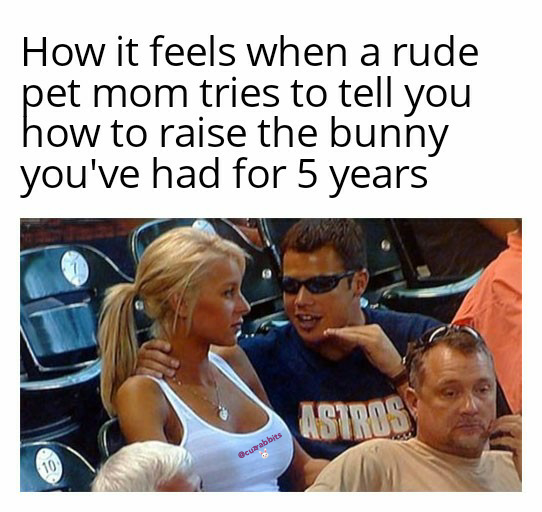
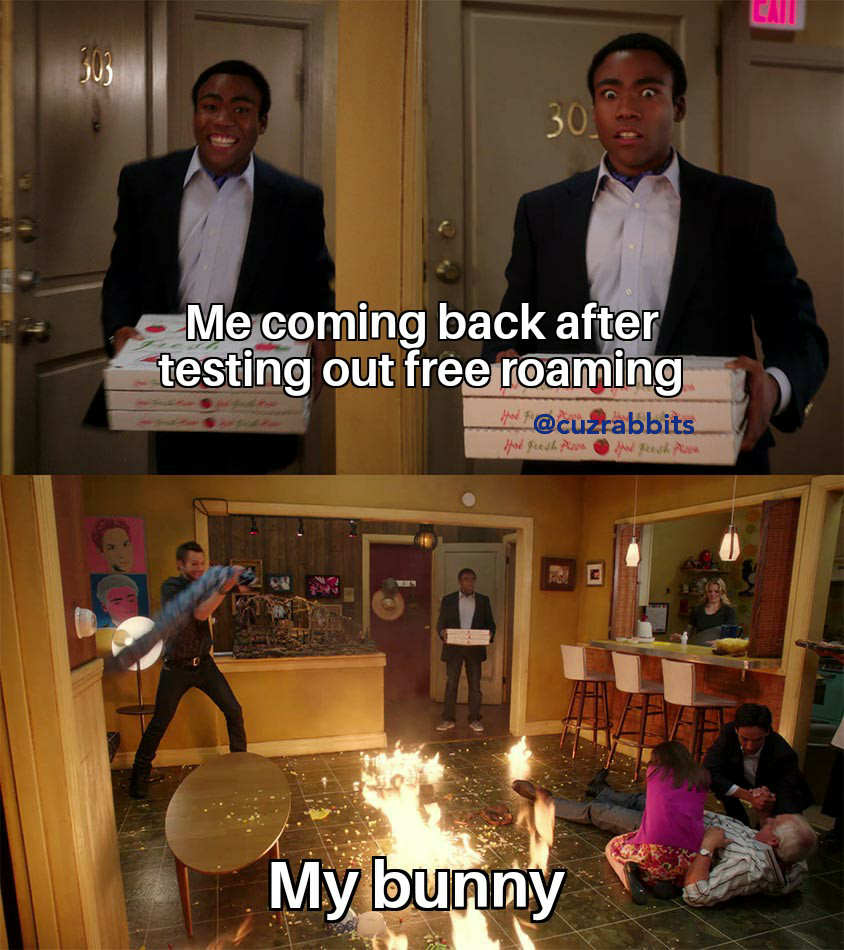
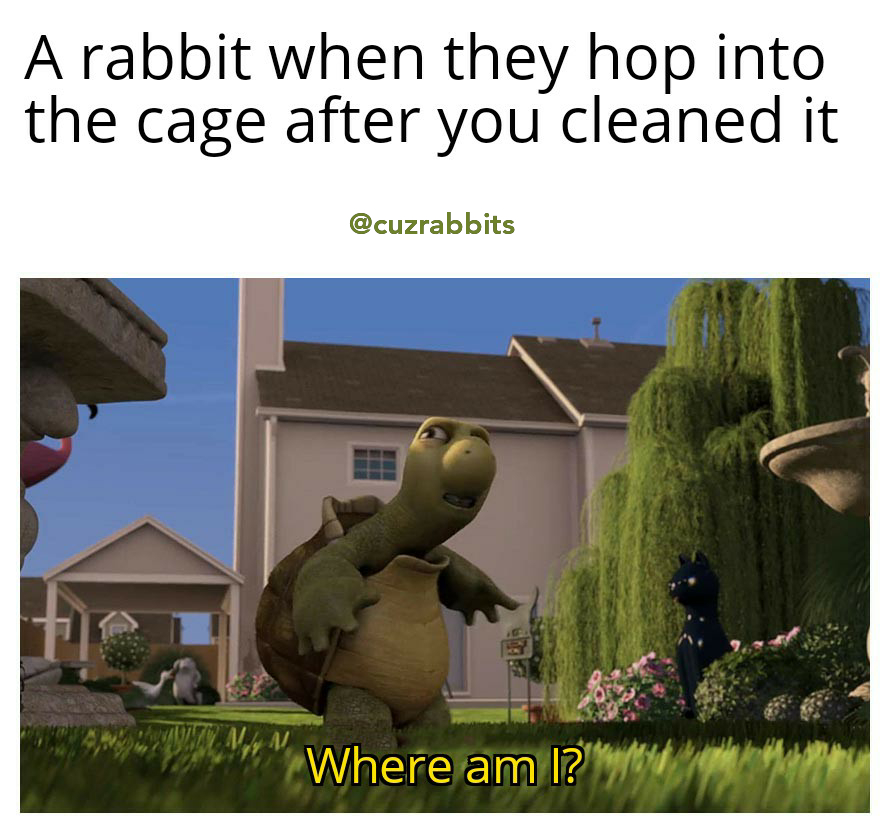
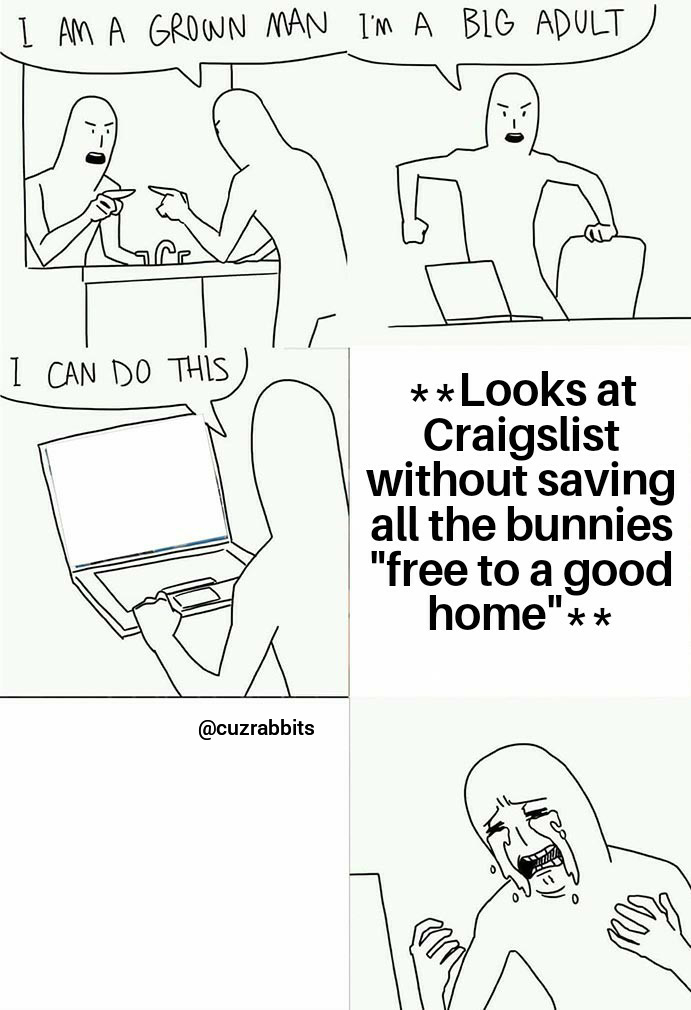
Here is a collection of the rabbit themed memes I’ve created over the last few years. There perfect for bunny parents, people who understand the sassiness of certain pets, and anyone you need to send a message to (to prove a point lol).
Feel free to share with friends, but please give credit!
Send Your Requests and Funny Bunny Photos
You can also comment any requests for memes!
If you message a funny photo of your bun to @cuzrabbits on Facebook or Instagram, I’ll try to feature your bun (with name credit) to the page and in the next meme collection article.
The Memes in All Their Glory
Stay Connected
Sign up for our newsletter through Substack. We’ll send updates about our latest blog posts and projects, so you won’t miss a thing!
We finally broke down and bought Baby the HairBuster, a comb for rabbit fur.
While we’re Small Pet Select ambassadors (and there are some affiliate links in this article), we’ve decided to give an honest review of this bunny brush.
Why we bought the HairBuster
The past year has been quite the stressful journey. Baby had not one but two instances of GI Stasis.
It definitely took a hit to our emergency funds, and our stimulus checks went largely to his medical treatments.
The hospital visits were also extremely nerve-wracking. Both included four overnights at a large emergency hospital about an hour and a half away from home. It was no vacation stay for Baby. And I was a nervous wreck, crying everyday and waiting anxiously by the phone for updates from the vets.
NOT an experience we would want to repeat for a third time!
After the second visit, the vet shared some theories about what may be happening.
Baby is no spring chicken and may be developing arthritis. He’d likely groom less, especially near his tail, which would take a stretch.
He may be grooming less frequently in general now that he’s older. So when he does groom, he’s ingesting a lot more hair all at once – instead of small amount over time.
Either way, we had to change things up.
Until that point, we hadn’t been brushing him with a real comb or brush. Nothing ever seemed to work. Baby either hated it and would attack. Or the brush itself wouldn’t actually pick up any hair.
The hospital visits told us our bare hands and hours of petting just weren’t getting the job done, especially during shedding season.
How we got our rabbit used to the brush
Once the comb came in the mail, we tried to get Baby used to the feeling of it.
It’s definitely more intense looking than any brush we’d ever tried. The comb has hard metal teeth with a piece of rubber weaving in between every few. The handle is also hard plastic but easy to grip.
Baby was not interested at first. He even grabbed in in between his teeth and tried to push it away.
We started out slow. At first, we pet the top of his head (his favorite) while running the flat part of the comb along his fur – not putting the comb teeth through the fur.
Once he got used to the feeling, we started replacing our hand with the comb. We tried on his lionhead mane first, since it’s closest to the head pets he loves. Then we moved to his butt, which in general is a no-go for him. It took longer for him to get used to it, but you could tell his hops away were just nervousness. The brushing wasn’t actually hurting him.
Does the HairBuster work?
We haven’t gone through shedding season with the comb yet, but after a month, we’re really starting to see a difference.
Here are our thoughts so far:
Pros
Effectiveness: Even after shedding season has ended, this brush gets a surprising amount of hair during each brushing session. It also means less fur on my hand when I’m just trying to pet Baby, not necessarily de-hair-ify him.
Oddly satisfying: There’s something about watching the line pattern that forms in the fur when you brush along your rabbit’s back – almost like a fluffy zen sand garden.
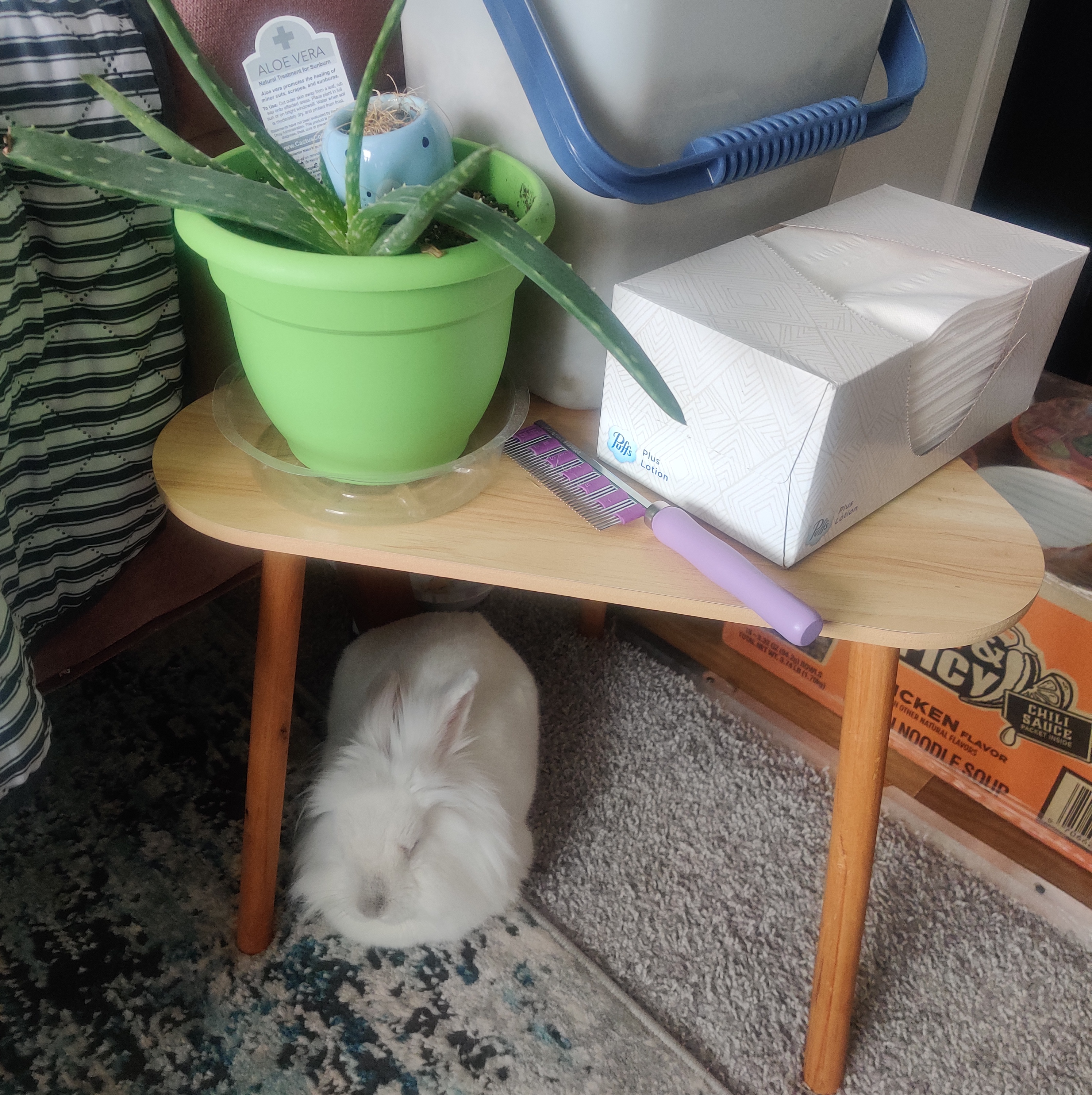
Routine establishing: Having a physical reminder of grooming makes it harder to forget brushing is essential for the health of your rabbit. I keep ours on a little side table, always within reach in our small one-bedroom apartment.
Cons
Cleanliness: While the purpose of the rubber band is to help collect hair, it seems like there’s always some stuck on there. If you’re a perfectionist, be prepared to go in with some tweezers to get the comb truly clean after a brushing session.
Price: I never thought I’d spend so much on a comb. Period.
Strangeness: Like I said, it took a few days for Baby to get accustomed to the feel of the brush. This is not an instant process.
Like using any tool around your bunny, it’s important to make sure you’re attentive when brushing your rabbit. My fear is that my eyes will wander to my phone, and I’ll accidentally poke Baby’s eye out. But it’s the same caution you’d need if you were, say, using clippers to trim your bunny’s nails.
Comparing the HairBuster to other methods
But the HairBuster is certainly not the only option for shedding rabbits. Here’s what we’ve tried over the years:
Using your hands: This has always been my go-to method because it’s the easiest and free! But the vet said this wasn’t good enough in Baby’s situation.
Wetting your hands: This option definitely works better than just using your regular old hands but still doesn’t do the job for Baby. He also hated having wet hair after.
Using a pet grooming glove: This was a big NO from Baby. He did not like the feeling, and the look of the gloves over our hands was too scary for him.
Using other types of brushes: We’ve bought a bunch of different types of brushes before and they just ended up being a waste. One pink brush in particular ended up becoming his nemesis.
Final Verdict
Each rabbit is different, so not every rabbit will need something as intense as the HairBuster.
For our family, it made sense to splurge on the comb – because of the vet mandate to upgrade from our bare hands and the great reviews it already had from other pet parents.
We’ll update this article once real shedding season hits again, but for now, we really recommend this comb for longer haired buns and those who have struggled with GI Stasis.
Have you tried the HairBuster for your rabbit? Let us know what you thought of it!
Stay Connected
Sign up for our newsletter through Substack. We’ll send updates about our latest blog posts and projects, so you won’t miss a thing!
Rabbit lovers know that their furry friends can be the most comforting creatures in the world. They’re our pets, friends, children, etc, etc, etc.
But oftentimes people put their own needs above their own.
And sometimes rabbits are the ones who need the real support in the relationship.
Unpopular opinion? Maybe. But rabbits should not be your first pick for an emotional support animal.
Rabbits cannot be registered as service animals
Before we even begin the discussion, let’s get it straight. Service animals are very different from emotional support animals.
Service animals:
Are trained to perform specific tasks (like remind you to take medication)
Are allowed in private businesses like restaurants where other animals are not allowed
Emotional support animals:
Provide comfort through their mere presence
Cannot go where pets are banned (check your local laws because some state do allow emotional support animals in public places)
Cannot be kicked out of an apartment or charged rent
Is not guaranteed the ability to fly with you in cabin (as of January 2020)
It’s important to note that there are some websites that allow you to register your rabbit as an “official” emotional support animal. They may send you a verification card in the mail, which may even get you into businesses if you present it (because they look official).
About the only thing registering can do is protect your pet from getting kicked out of your apartment by your landlord. Even if your complex or building doesn’t allow pets, they can’t ban your emotional support animal or charge you extra rent for your pet. That’s thanks to the Fair Housing Amendments Act of 1998.
But there are no government registries for emotional support animals that can circumvent the law. That’s why many people consider such registry sites scams that take your money for a certification that essentially means nothing.
What you would really need is for your primary care doctor to write a letter designating your rabbit as an emotional support animal. Make sure to have it on hand.
Rabbits are prey animals
By nature, rabbits tend to be more fearful, sensitive to loud noises and quick movements.
Yes, there are the Chuck Norrises of rabbits, unphased by anything, able to go on trips and car rides.
But for the most part, rabbits feel better at home. It helped give them a routine and a familiar environment where they feel safe. The slightest change in that routine, like a change in diet, not coming when called, or sitting in one spot for too long, could signify a life threatening illness.
Vet visit photo of shame
Rabbits can have health issues at any moment
Yes, any animal – or human for that matter – can technically get sick at any time.
But rabbits have very important diets they have to follow. They need unlimited hay, a small amount of pellets, and plenty of fresh vegetables. Even if you follow all the rules, your rabbit could slip into GI stasis and pass away within a matter of hours.
If you’re looking for emotional comfort at the drop of a hat, know your rabbit may end up causing some of that emotional distress. Like anything you love dearly, the thought of losing your bunny could be enough to cause a panic attack at the first sign of symptoms.
Decide for yourself, but I made my choice
Several of the more well known rabbits on the interwebs are emotional support animals. Those rabbits clearly have a special relationship with their owners and a specific disposition to provide that support to their owners.
I commend those rabbits!
For me personally, I would never consider making Baby my “official” emotional support animal.
Car rides are not his favorite.
He doesn’t like when strangers come up to try to pet him.
He has his routine at home, and deviating from it infuriates him.
Baby has had two GI stasis scares in the last year (and if it happens again, I’m going to need an emotional support animal to help me deal with the trauma he has put me through lol)
Baby could go either way on a rolling ride, but prefers the homebody life.
Should your rabbit be an emotional support animal?
These are the factors you should be considering when debating bringing your bunny places to emotionally support you.
As yourself:
Does your rabbit like car rides?
Is your rabbit okay with being pet by strangers (there’s always that one rude person who pets without asking)?
Does your rabbit enjoy being rolled around in a cart?
Is your rabbit sensitive to loud noises?
Does your rabbit have a history of health issues?
Would your rabbit handle being in a harness or carrier for long periods of time?
Would your rabbit jump out of a cart or carrier?
Each rabbit is different. Some can handle it. For others, the decision to make them an emotional support animal could expose them to a deadly amount of otherwise avoidable stress.




















































 cuzrabbits